
EMA İzmir
On the shores of the Aegean — ancient Smyrna, blue-flag beaches and the ruins of Ephesus. An inspiring base for our Erasmus+ sustainability and inclusive-education courses in İzmir.
Courses at this center are open to participants travelling from a country other than Türkiye — a core requirement of Erasmus+ mobility.
Let's take a small tour of İzmir.
Known across Türkiye as “Beautiful İzmir,” the city — ancient Smyrna — sits where Anatolia reaches into the Aegean, with over 8,500 years of continuous settlement. It wraps around a wide bay alive with yachts and ferries, framed by a 629-kilometre coastline and dozens of blue-flag beaches.
From a walk along the Kordon and the historic Asansör to the ruins of Ephesus and the Temple of Artemis, İzmir blends sea, history and a relaxed Aegean rhythm for teachers attending our Erasmus+ training course here — with resort towns like Çeşme, Alaçatı, Urla and Seferihisar all within reach.
Course topics running at this center.
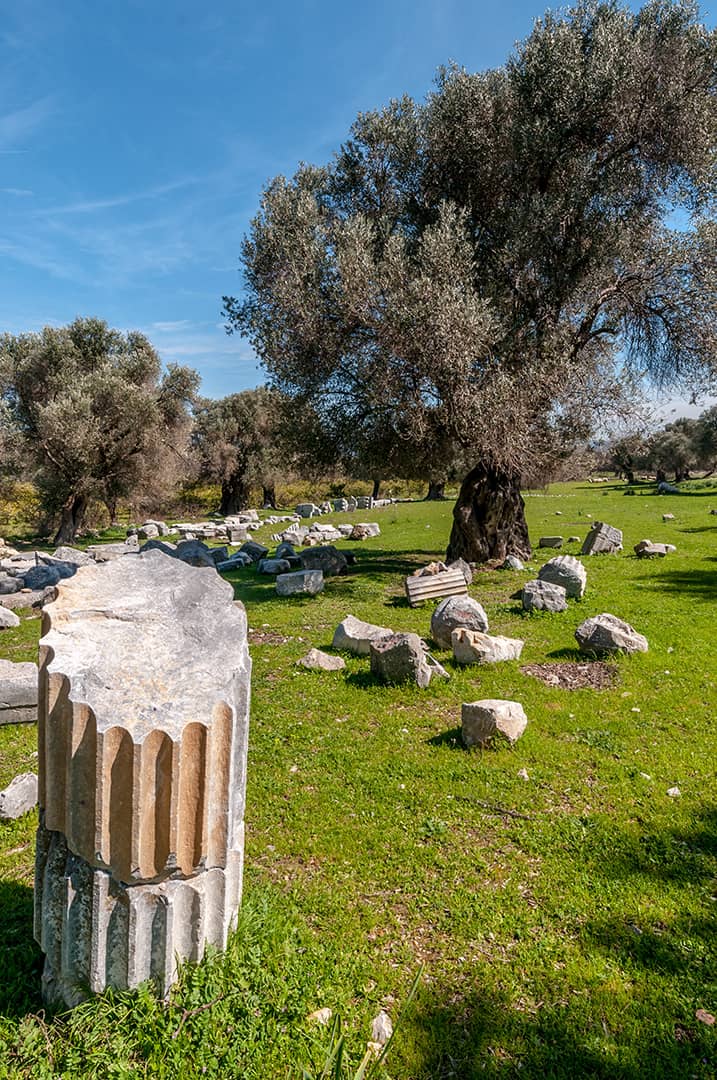
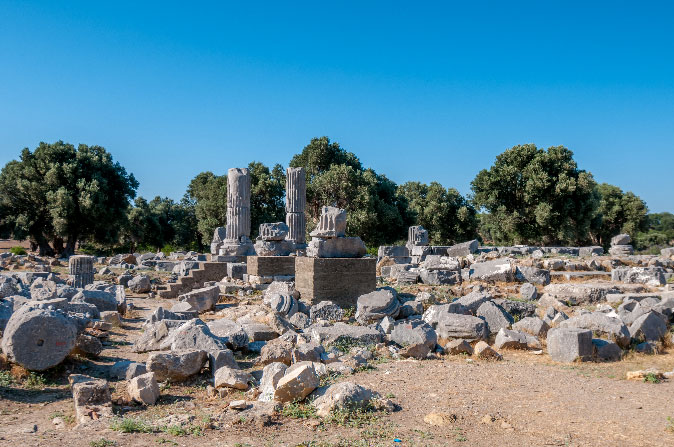
Ephesus and the ancient Aegean
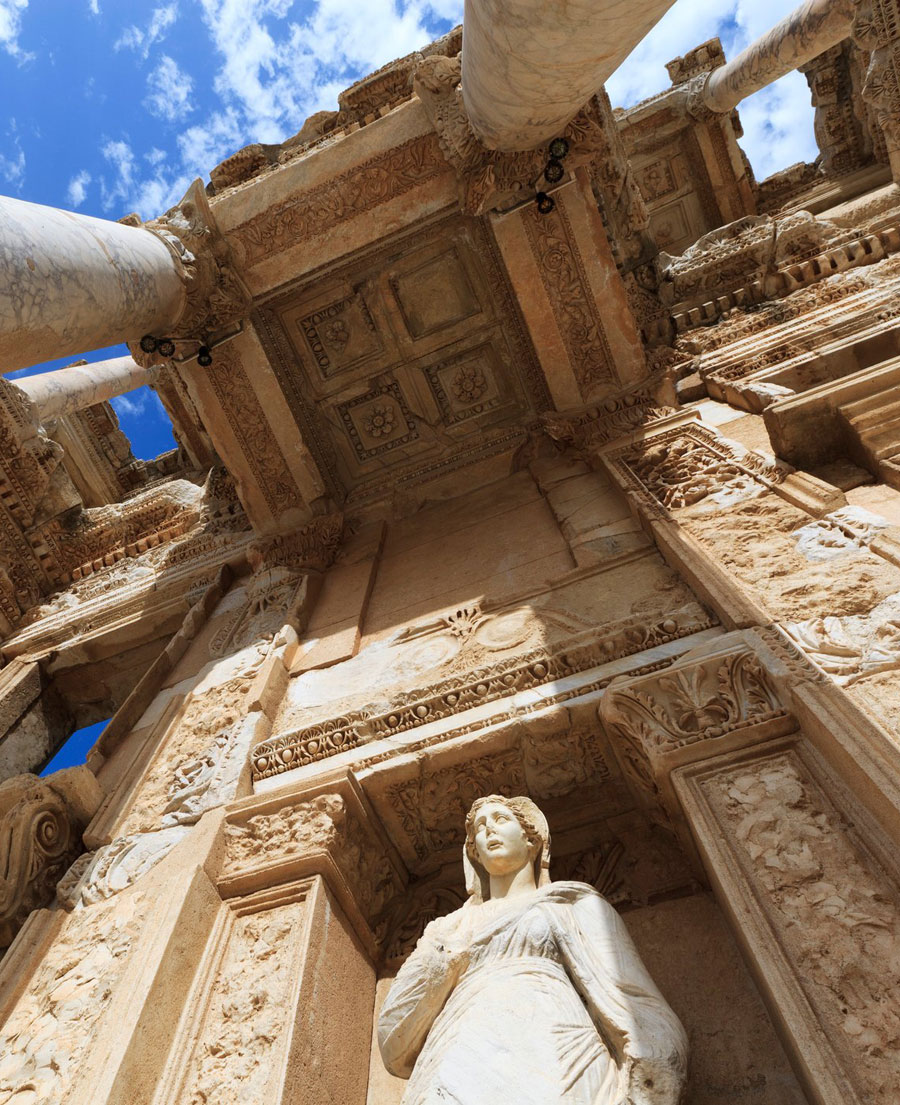
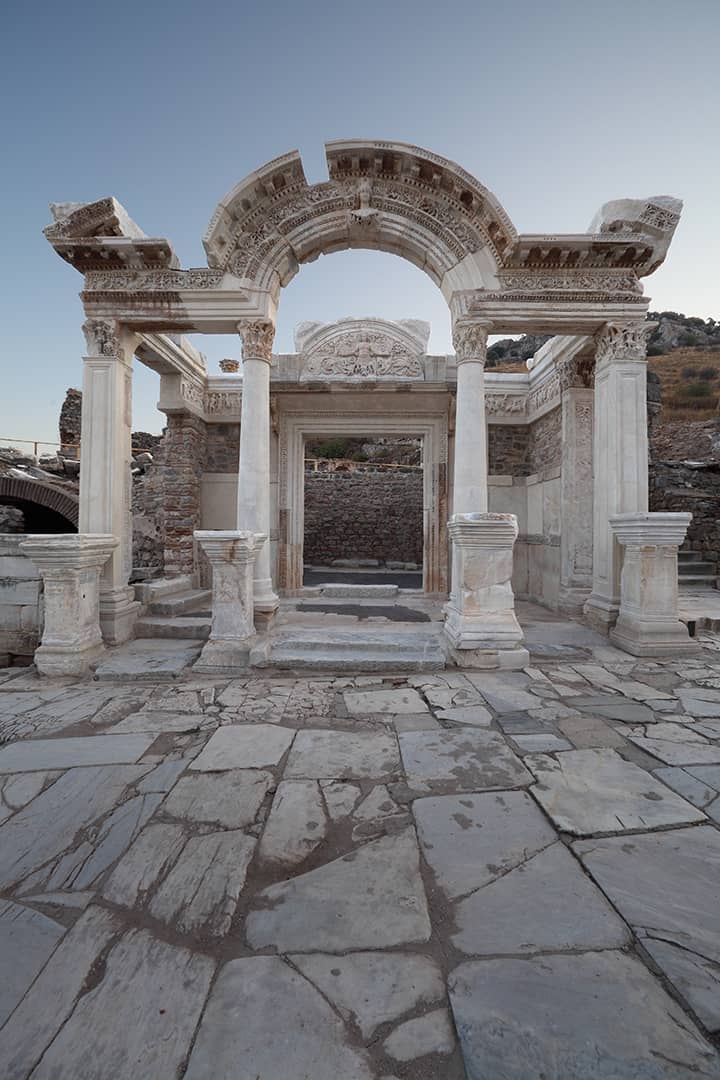
No visit to the region is complete without a day at Ephesus, one of the best-preserved ancient cities in the Mediterranean, its marble-columned Library of Celsus and Hadrian’s Temple still standing along the old Curetes Way.
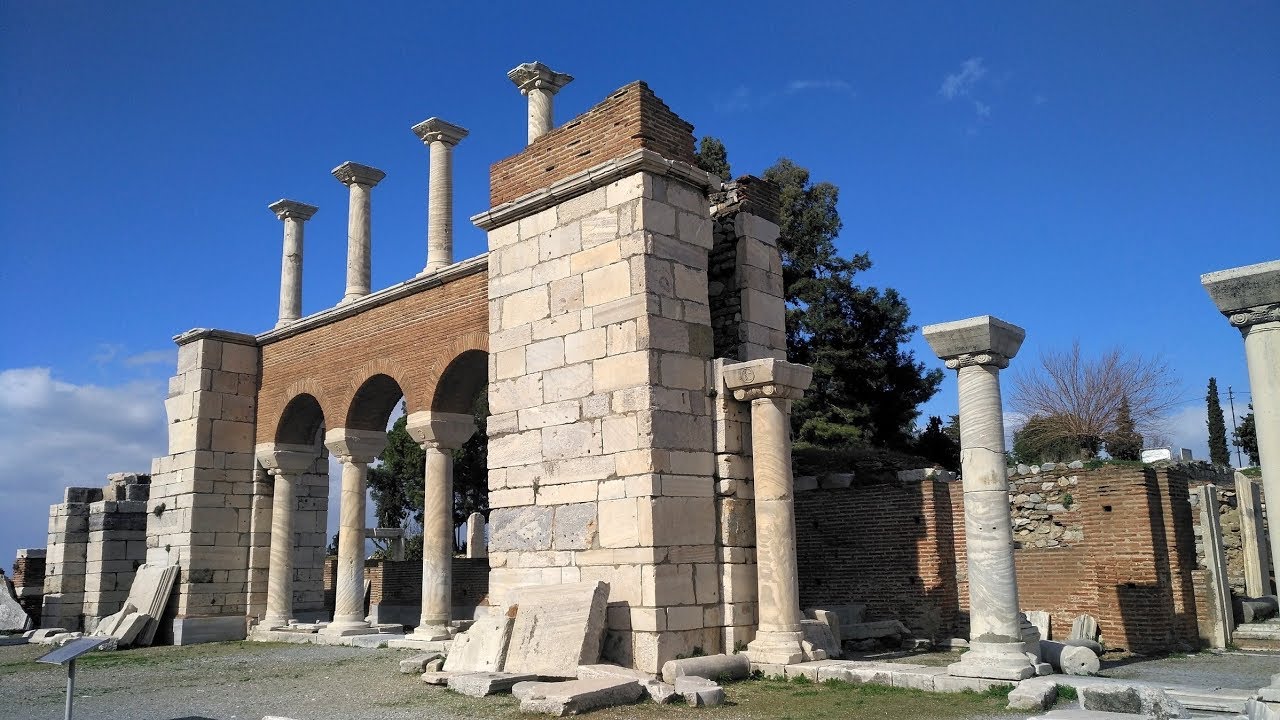
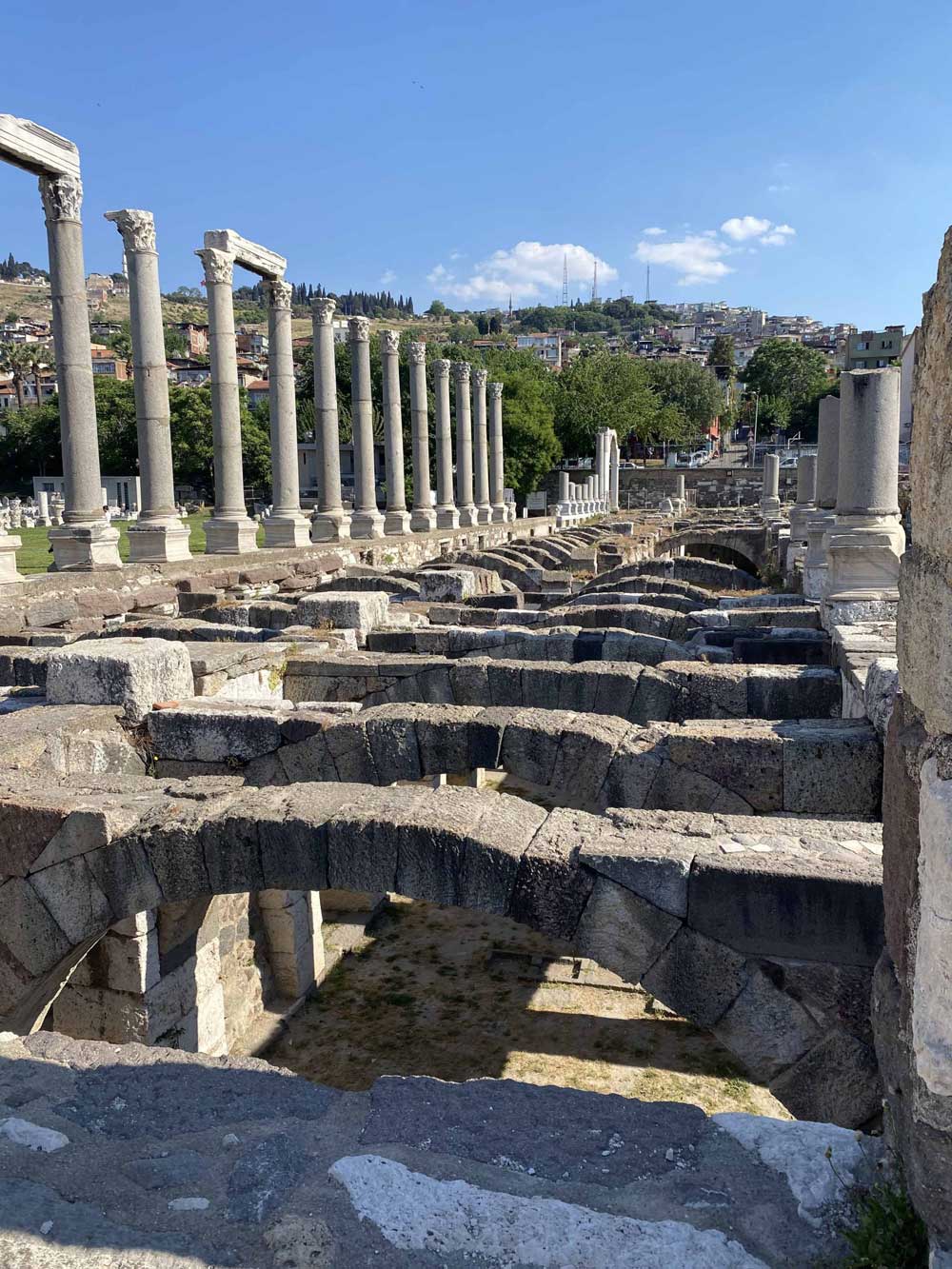
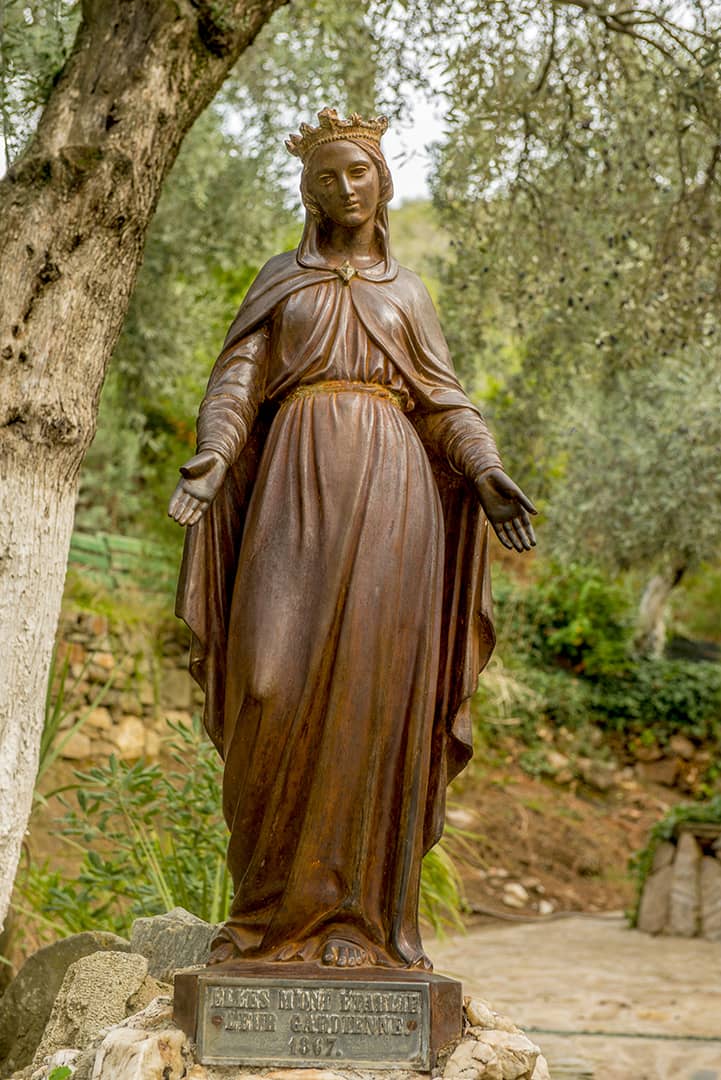
Nearby, the Basilica of St. John and the House of the Virgin Mary draw pilgrims and historians alike, while the ancient site of Smyrna itself — İzmir’s own predecessor — is still being uncovered in the city centre.
Kemeraltı and the old town
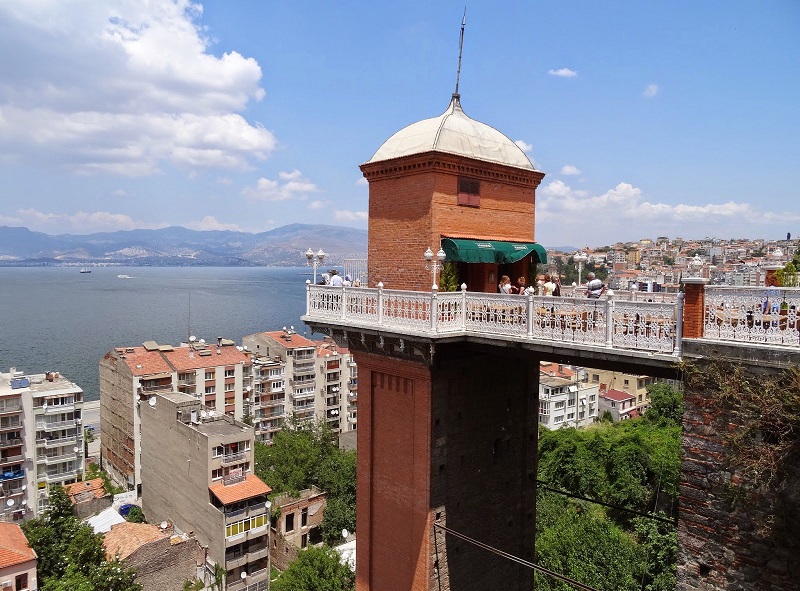
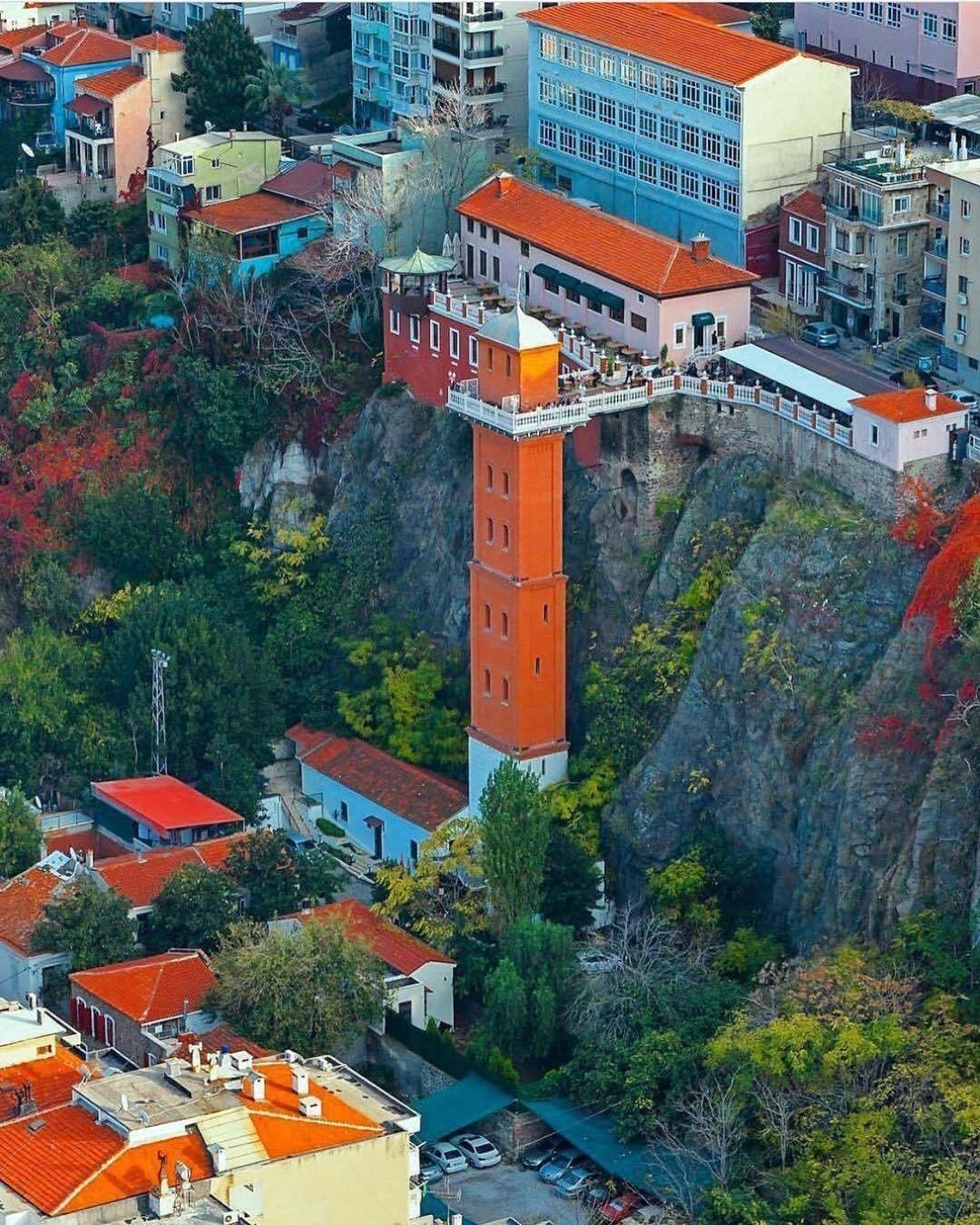
Down by the harbour in Karataş, the 1907 Asansör — a narrow iron elevator tower — still lifts visitors up the cliffside for one of the best views over the bay, cafés and all.
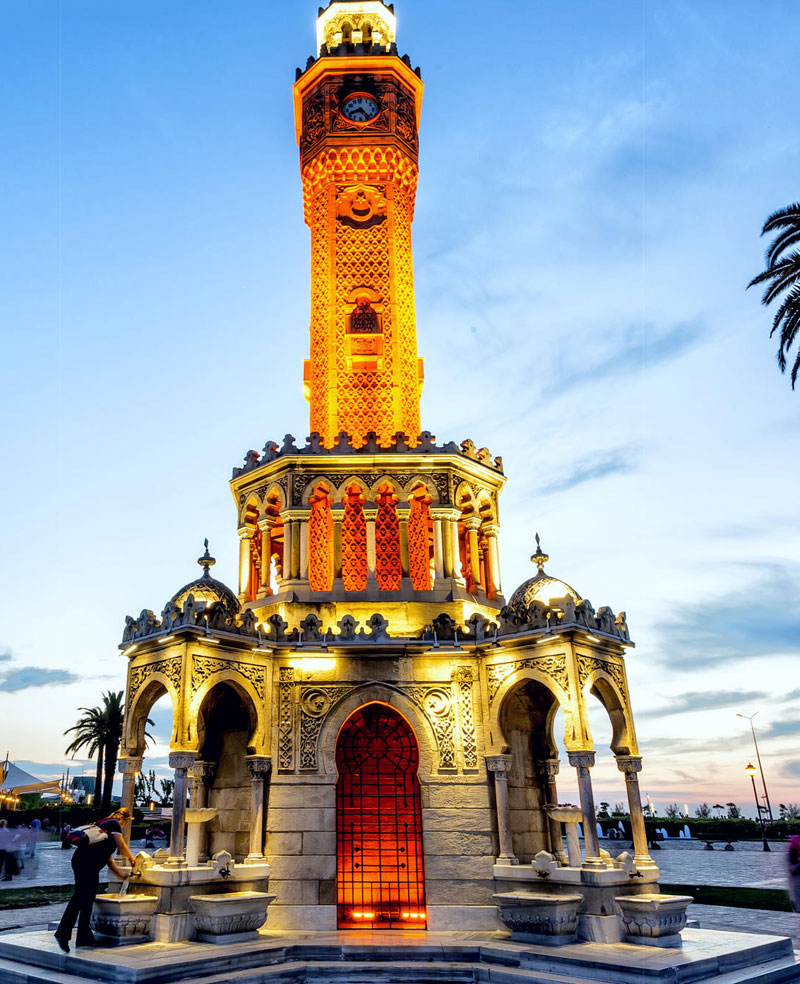
A little further into the old town stands the İzmir Clock Tower, the city’s Ottoman-era symbol at the heart of Konak Square, right beside the winding lanes and stalls of the historic Kemeraltı Bazaar.
Coastal escapes — Alaçatı, Urla & Ilıca
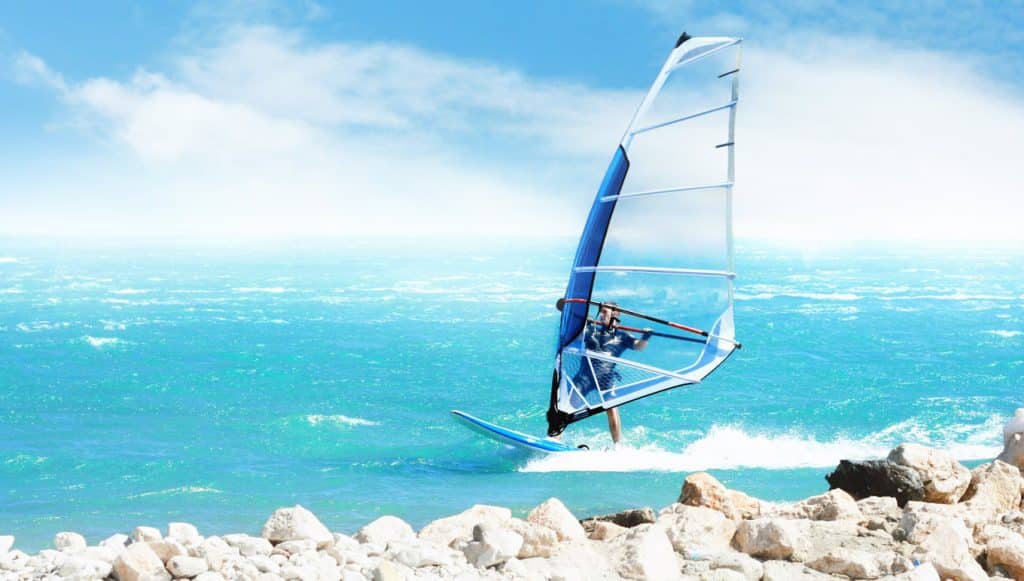
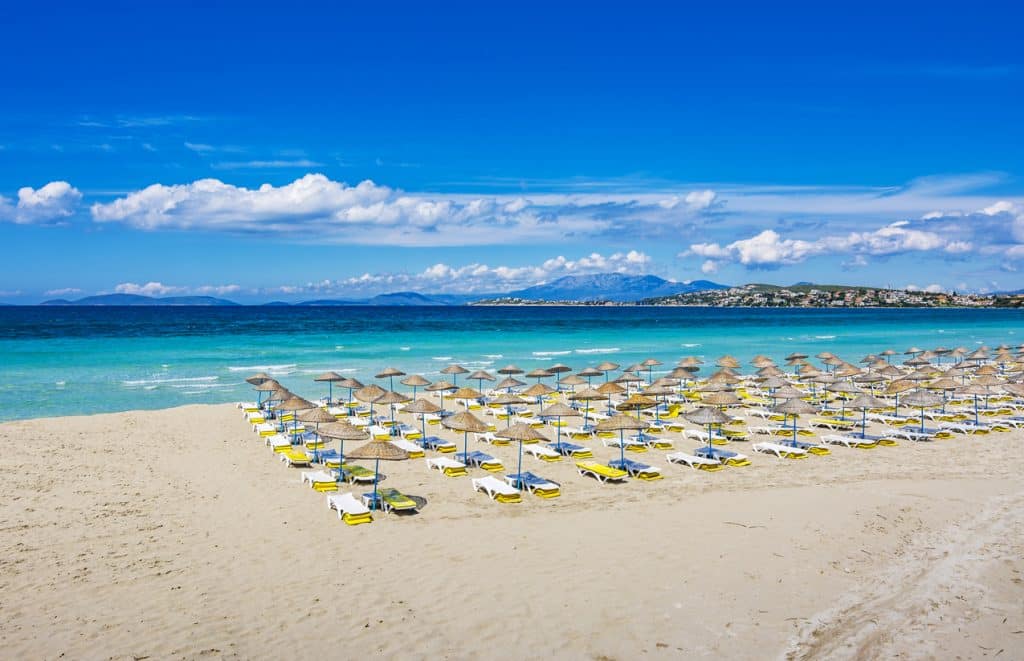
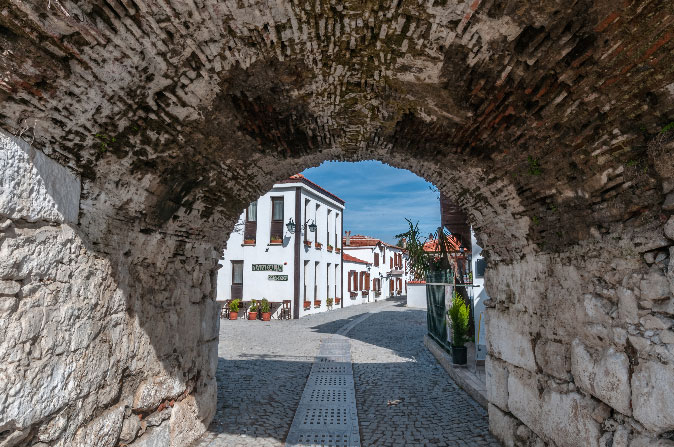
An hour or so from the city centre, İzmir’s resort towns turn the weekend into a beach day — windsurfing bays, vineyard villages and long stretches of golden sand.

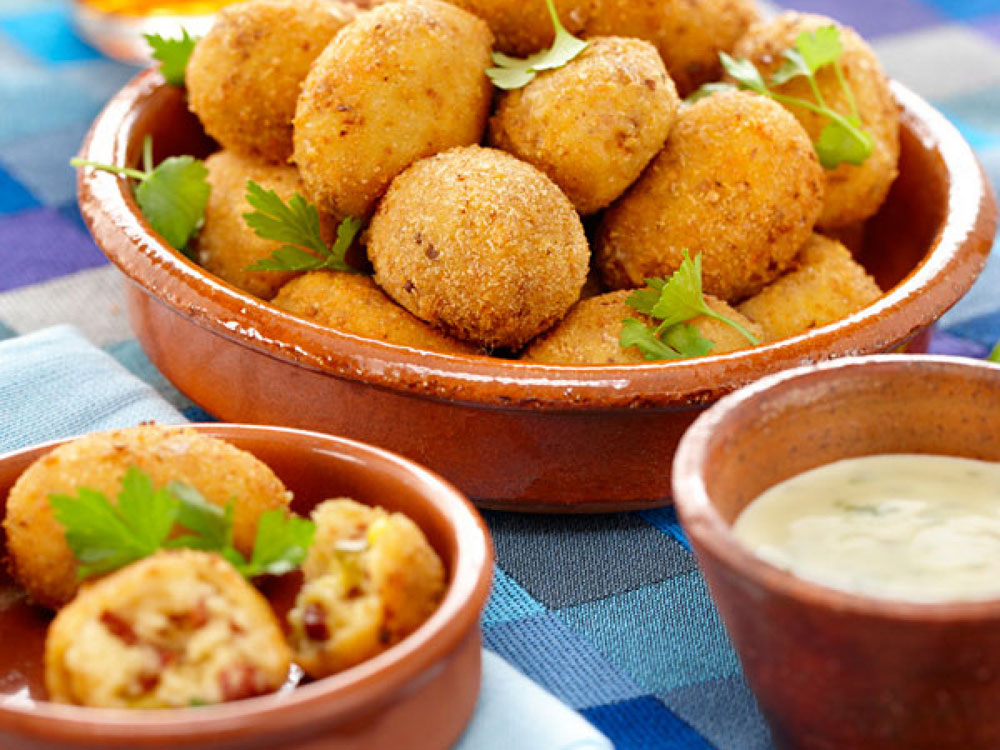
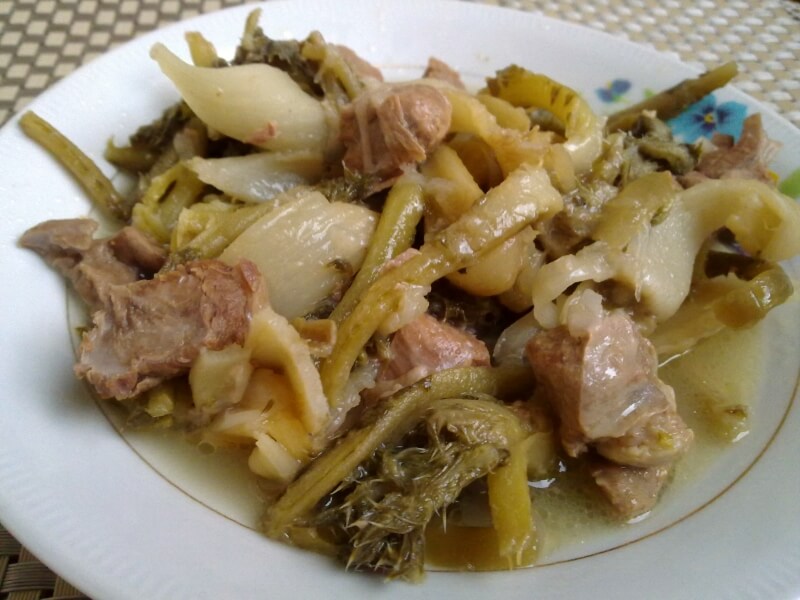
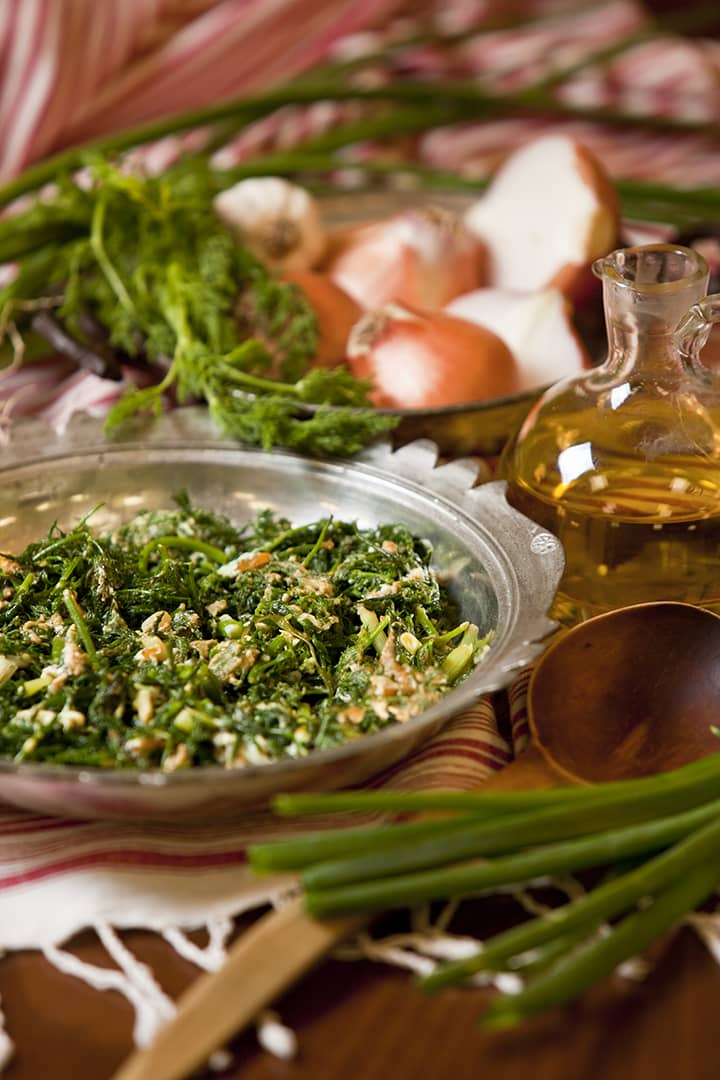
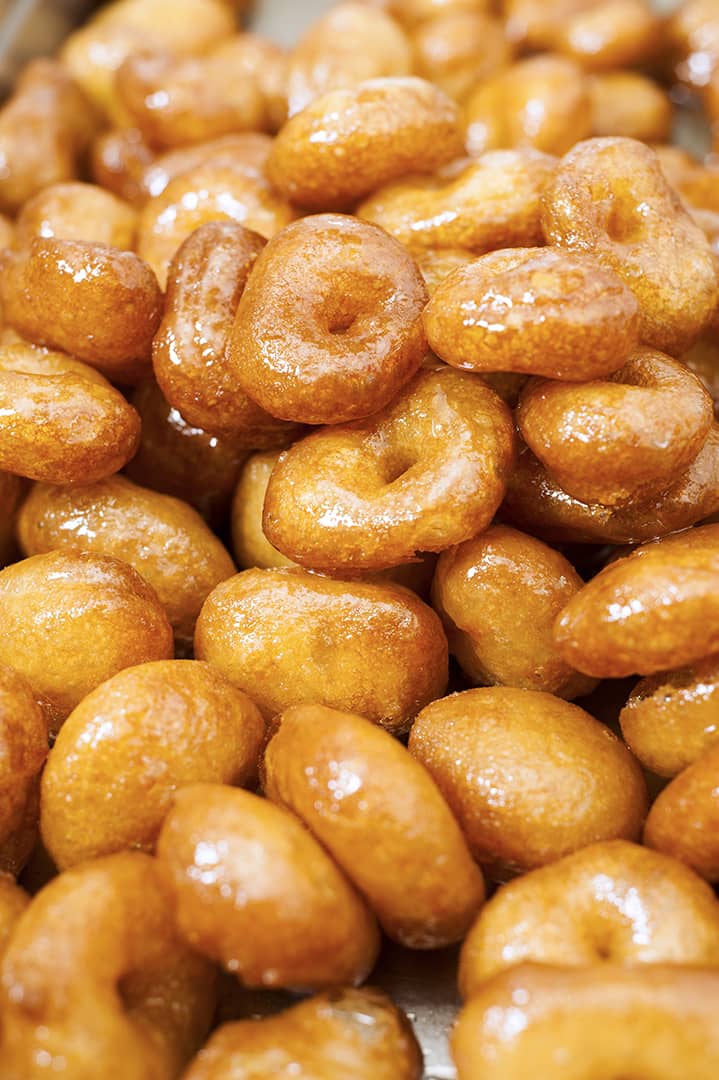
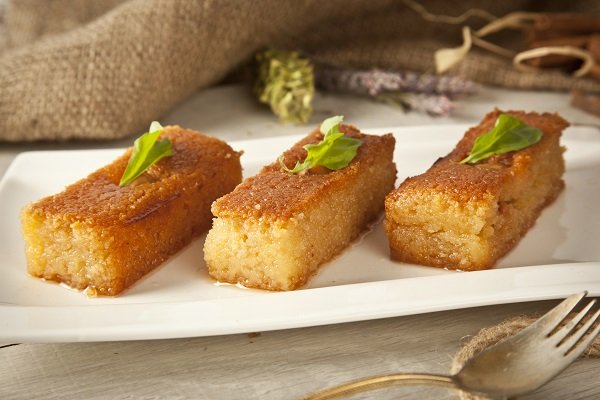
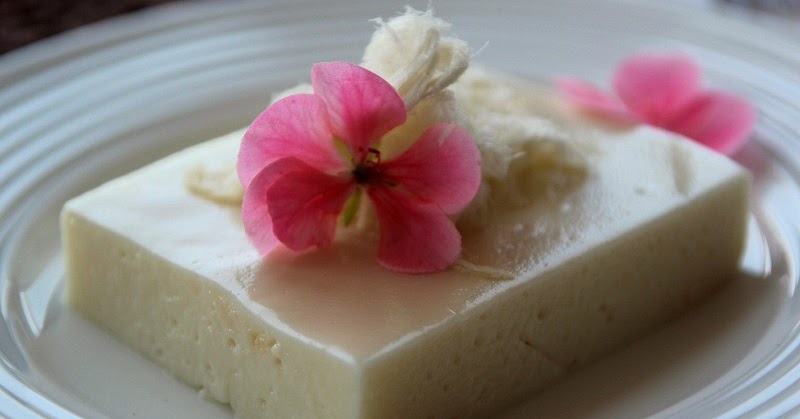
İzmir has always cooked differently from the rest of Türkiye — a cuisine built on wild greens, olive oil and whatever the Aegean coast happens to be growing that week.
A taste of İzmir
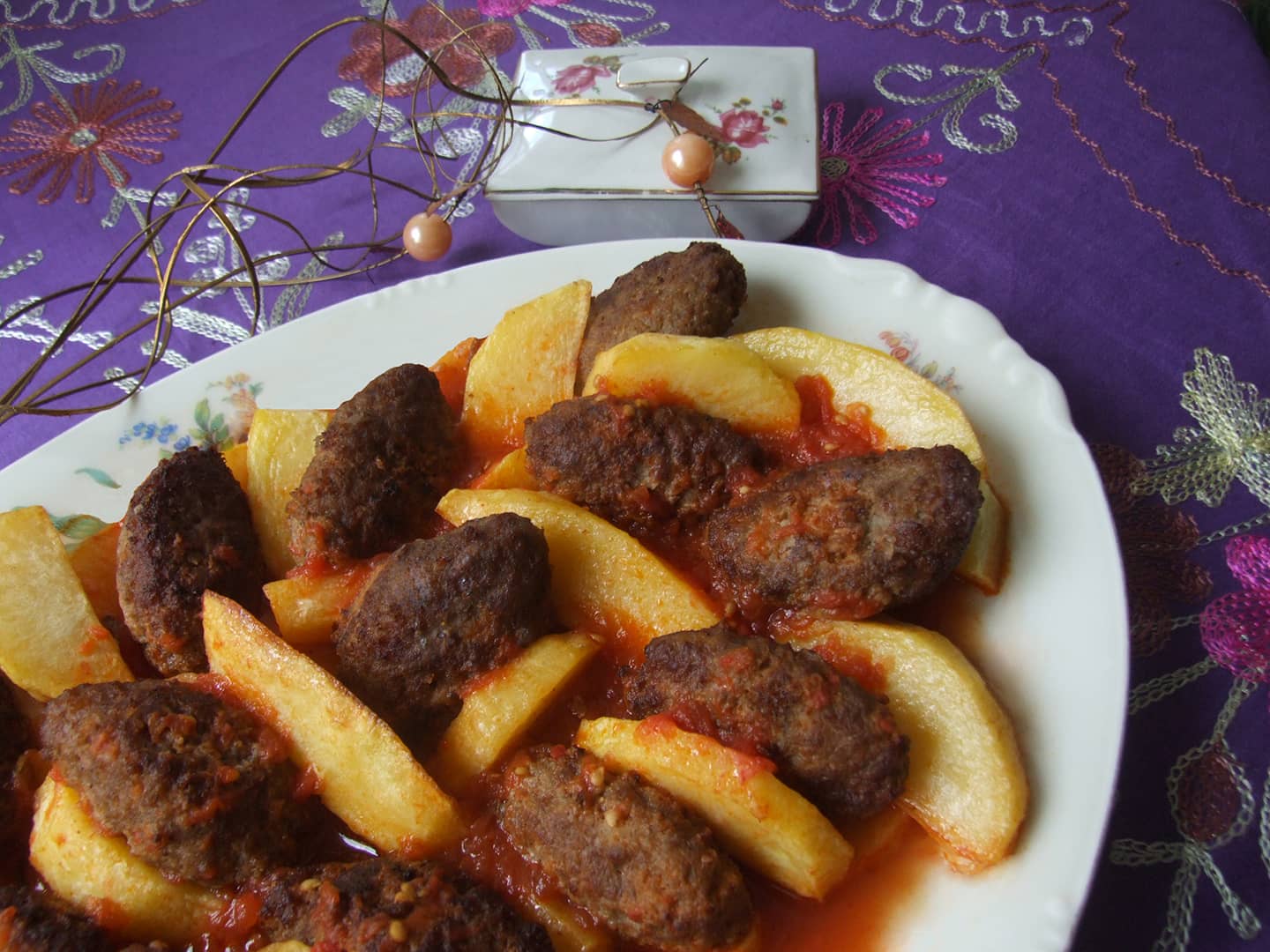
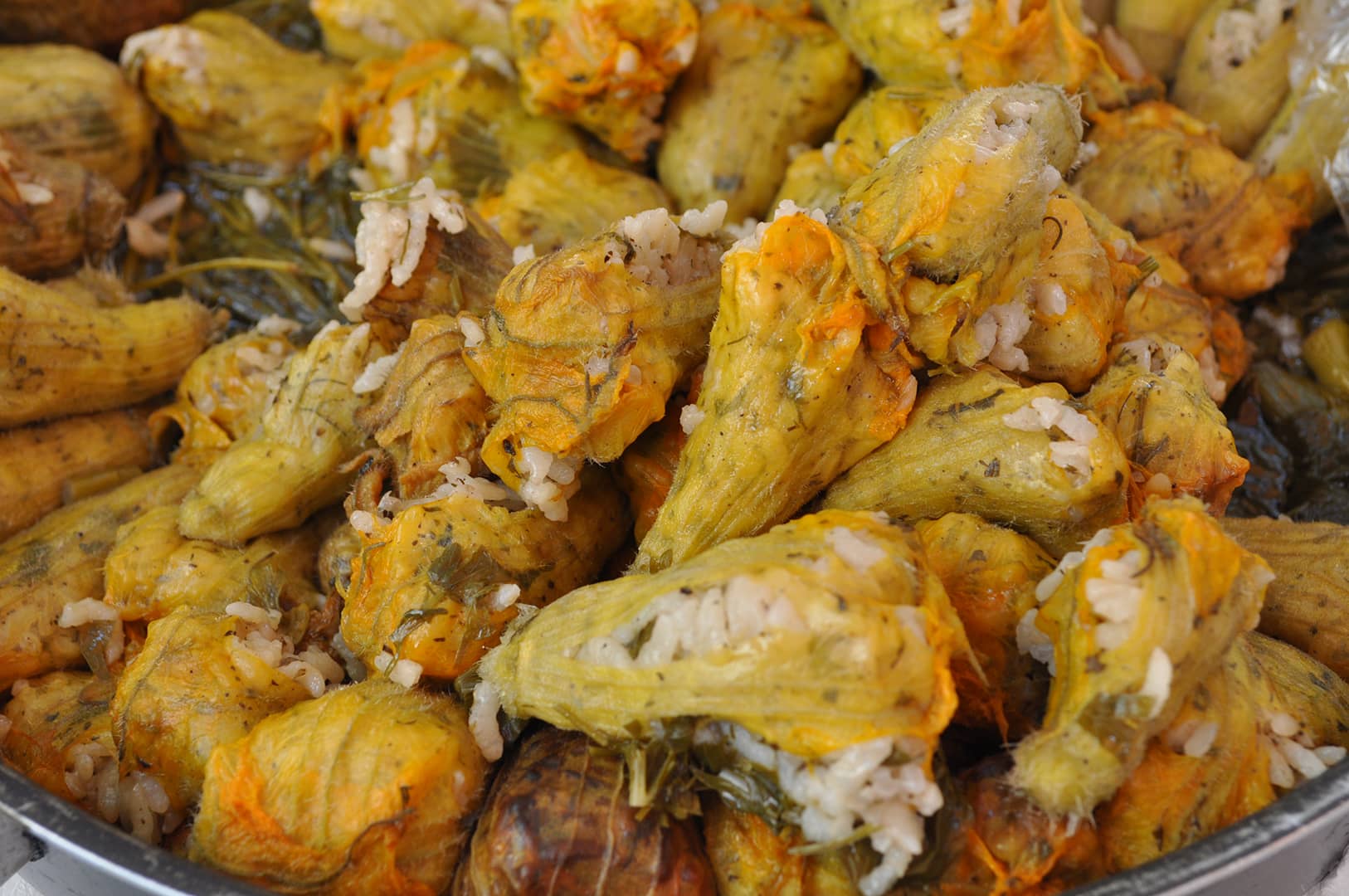
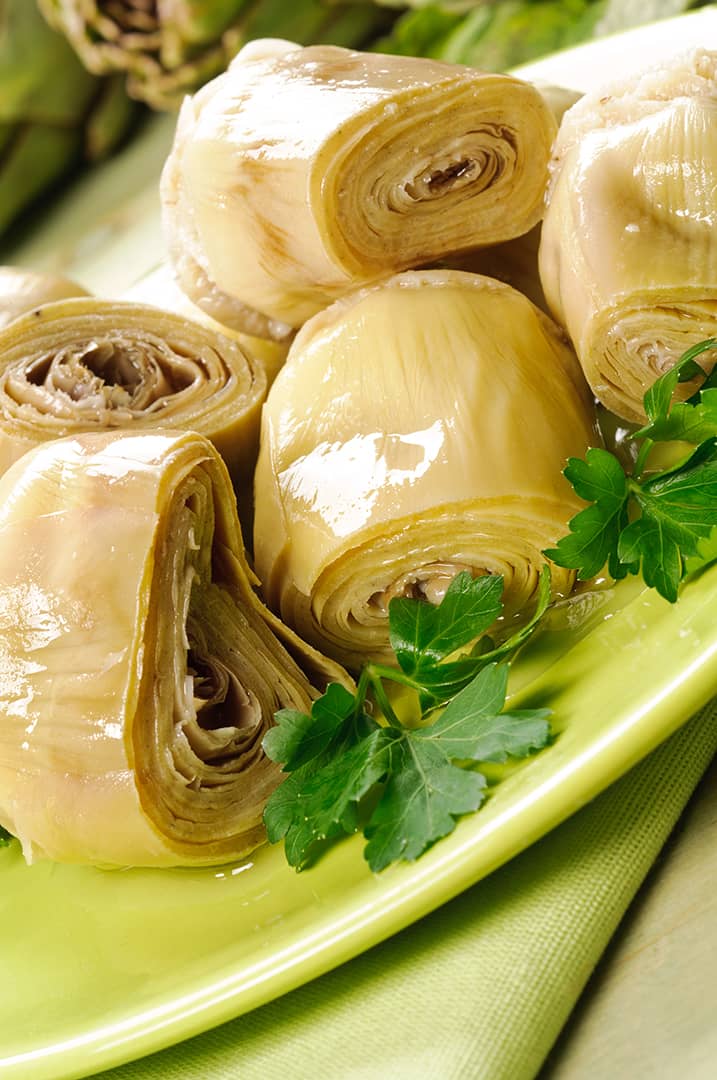
İzmir’s Aegean cuisine is built on olive oil, wild greens and whatever’s fresh — a world away from the kebab-heavy food of central Türkiye, and one of the best reasons to linger after class.
Quick facts about İzmir
Before you arrive
Sort these two things well before departure — neither takes long, but neither should be left until the airport.
Visa & entry requirements
Citizens of the USA, UK, Canada, Australia and a number of other nationalities need an e-Visa before arrival — most EU passport holders can enter visa-free for short stays, but requirements vary by nationality, so check yours directly on the official site rather than relying on a general rule of thumb.
Official e-Visa site ↗Travel insurance
We recommend a policy covering medical expenses, trip cancellation and lost baggage for the duration of your stay.
Weather & packing
Our courses run across the year, so "what's the weather like" depends on when you're travelling — here's İzmir by season, plus a checklist you can actually tick off.
| Season | Typical range | What to expect |
|---|---|---|
| Spring (Mar–May) | ~17–27°C | A steady warm-up from mild to properly warm — a comfortable season for sightseeing, occasional early-spring rain. |
| Summer (Jun–Aug) | ~32–35°C | Hot, sunny and largely dry. İzmir's own quirk is the "meltem" — a regular afternoon sea breeze off the Aegean that takes the edge off the heat more than inland cities get. |
| Autumn (Sep–Nov) | ~19–31°C | Warm and sunny into September, cooling steadily to a mild, pleasant late autumn by November. |
| Winter (Dec–Feb) | ~6–13°C | Mild by European standards but the wettest months of the year — December is the rainiest, so a rain jacket earns its space in the suitcase. |
Documents
Clothing
Electronics
Health & money
Getting to the venue
Adnan Menderes Airport (ADB) is İzmir's own international airport — about 30 minutes from Bornova, and unlike Mersin or Antalya, İzmir has a proper rail link straight into the city.
| From | Best option | Approx. duration | Approx. cost |
|---|---|---|---|
| Adnan Menderes Airport (ADB) | İZBAN suburban train (station inside the terminal) | ~30 min to Alsancak, every 10–20 min | See current fares ↗ |
| Adnan Menderes Airport (ADB) | Havaş shuttle bus (Konak–Alsancak–Karşıyaka route) | ~50 min, roughly hourly | See current fares ↗ |
| Adnan Menderes Airport (ADB) | Official metered taxi | ~30 min (traffic-dependent) | Metered fare, varies with traffic |
Once you're in İzmir, getting to the course center in Bornova is straightforward — and İzmir has a genuinely joined-up public transport network, more so than most of our other course cities:
From central İzmir
Bornova is home to Ege University and sits inland from the coast — reachable by metro, bus or taxi from Alsancak, Konak or Karşıyaka.
Metro, tram, İZBAN & ferries
İzmir runs a real multi-mode network: the İzmir Metro (Fahrettin Altay–Evka 3), two separate tram lines (Konak and Karşıyaka), the İZBAN suburban train, ESHOT buses, and İZDENİZ ferries across the bay. Halkapınar Transfer Center is where most of these meet. One card — İzmirim Kart — covers all of them, with a discounted transfer if you switch modes within 90 minutes.
Taxis
Licensed, metered taxis are widely available and a practical way to reach the venue directly, especially with luggage.
Neighborhoods & accommodation
A few areas stand out for course participants:
| Neighborhood | Why stay here |
|---|---|
| Bornova | Home to the course center and Ege University — a lively, youthful district with plenty of restaurants and green space, the most convenient base for the venue itself. |
| Alsancak | İzmir's café, bar and shopping district along the Kordon waterfront — historic Levantine houses, sea views, and the liveliest evenings in the city. |
| Konak | The administrative and historic heart of İzmir, next to the Kemeraltı Bazaar — dense, walkable and central, usually most visitors' first stop. |
| Karşıyaka | Across the bay by ferry or metro — quieter and more residential, with its own parks and a growing arts scene. |
Hotel prices vary with season and how far ahead you book — compare current listings for İzmir ↗. Staying in Bornova keeps travel to the course center to a minimum; Alsancak or Konak trade a slightly longer commute for more restaurants and nightlife within walking distance.
Money
Cards & ATMs
Credit/debit cards are widely accepted in hotels, restaurants and shops across central İzmir. ATMs are common in Bornova, Alsancak and Konak — most offer an English-language menu and withdrawing TRY directly usually gives a better rate than exchanging cash.
Before you fly
Notify your bank you're travelling, so a card payment in Türkiye doesn't get blocked as suspicious. Carry a backup card if you have one.
Cash still matters
Smaller lokantas, market stalls and some taxis prefer cash — keep some TRY on you. City-centre exchange offices are generally better value than airport counters.
Tipping
10–15% in restaurants is standard, usually left in cash rather than added to a card payment — most card machines in Türkiye don't support adding a tip. Rounding up for taxis is common and appreciated.
Safety & practical info
İzmir does not appear on the UK Foreign Office's list of areas in Türkiye with a specific travel warning — only parts of the southeast do (Hatay, Hakkâri and Ağrı provinces), along with the immediate area around the Syrian border. As in any major city, ordinary common sense covers most of the rest.
| Topic | Advice |
|---|---|
| General | Central areas (Bornova, Alsancak, Konak) are comfortable to walk during the day; use normal city awareness after dark, as anywhere. |
| Taxis | Use official, metered taxis from a marked rank rather than an unmarked car. |
| Valuables | Keep bags and valuables close on crowded metro/tram lines and in the Kemeraltı Bazaar, as you would in any city. |
| Day trips | Ephesus, Şirince and the coastal towns are all well-established, regularly visited sites — travel there as you would to any tourist destination, ideally in daylight. |
Culture & etiquette
İzmir has a reputation as one of Türkiye's more relaxed, cosmopolitan cities — but the same core courtesies that apply across the country are still worth knowing:
| Topic | Guidance |
|---|---|
| Mosques | Remove your shoes before entering, and dress modestly if you visit one during your stay. |
| Greetings | "Merhaba" (hello) goes a long way. Politeness is valued — "lütfen" (please) and "teşekkür ederim" (thank you) are always appreciated. |
| Dress code | Casual dress is fine day to day; modest dress is expected in mosques and more conservative settings. |
| Dining | Meals are social and often unhurried — tipping is covered under Money above. |
| Photography | Always ask before photographing people directly. |
Three more İzmir essentials
Beyond the dishes already covered above, these three street-food staples are so specific to İzmir that leaving them off a practical guide would be an omission:
| Dish | What it is |
|---|---|
| Boyoz | A layered pastry brought to İzmir by Sephardic Jewish immigrants in the 15th century, traditionally eaten for breakfast with a hard-boiled egg and tea — still made only in İzmir in its original form. |
| Gevrek | İzmir's answer to the simit — a sesame-crusted ring dipped in grape molasses before a brief bake, giving it a crunch the plain İstanbul version doesn't have. Holds an official Turkish geographical-indication registration. |
| Kumru | A roughly 150-year-old sandwich on a distinctive sesame roll, filled with kaşar cheese, sucuk and tomato — officially registered as "İzmir Kumrusu" (Turkish Patent and Trademark Office geographical indication, 2017). |
We arrange tailor-made Erasmus+ sessions on demand — tell us your preferred topic and travel window and we'll schedule it.