
EMA Budapest
The Pearl of the Danube — thermal baths, UNESCO boulevards and a vibrant cultural scene. Our Erasmus+ course center for teacher training courses in the heart of Hungary.
Courses at this center are open to participants travelling from a country other than Hungary — a core requirement of Erasmus+ mobility.
Let's take a small tour of Budapest.
Budapest, the capital of Hungary, is a stunning city straddling the Danube — the “Pearl of the Danube,” famous for its historic architecture, thermal baths and vibrant cultural scene. The city is divided into Buda and Pest, each with its own character, from hilltop castles to lively boulevards and riverside cafés.
For teachers joining our Erasmus+ training course in Budapest, it is a rich cultural backdrop: the UNESCO-listed Castle District, the grand Andrássy Avenue and Heroes’ Square, and centuries-old thermal baths — all within easy reach of the course center, with the Danube and its illuminated bridges at the heart of the city.
Course topics running at this center.
A city built in layers
Long before it was Budapest, this stretch of the Danube was a Roman garrison town, then a Mongol ruin, then an Ottoman frontier city, then the twin capital of an empire — each layer still visible if you know where to look, from Roman stones in Óbuda to Ottoman baths still in daily use.
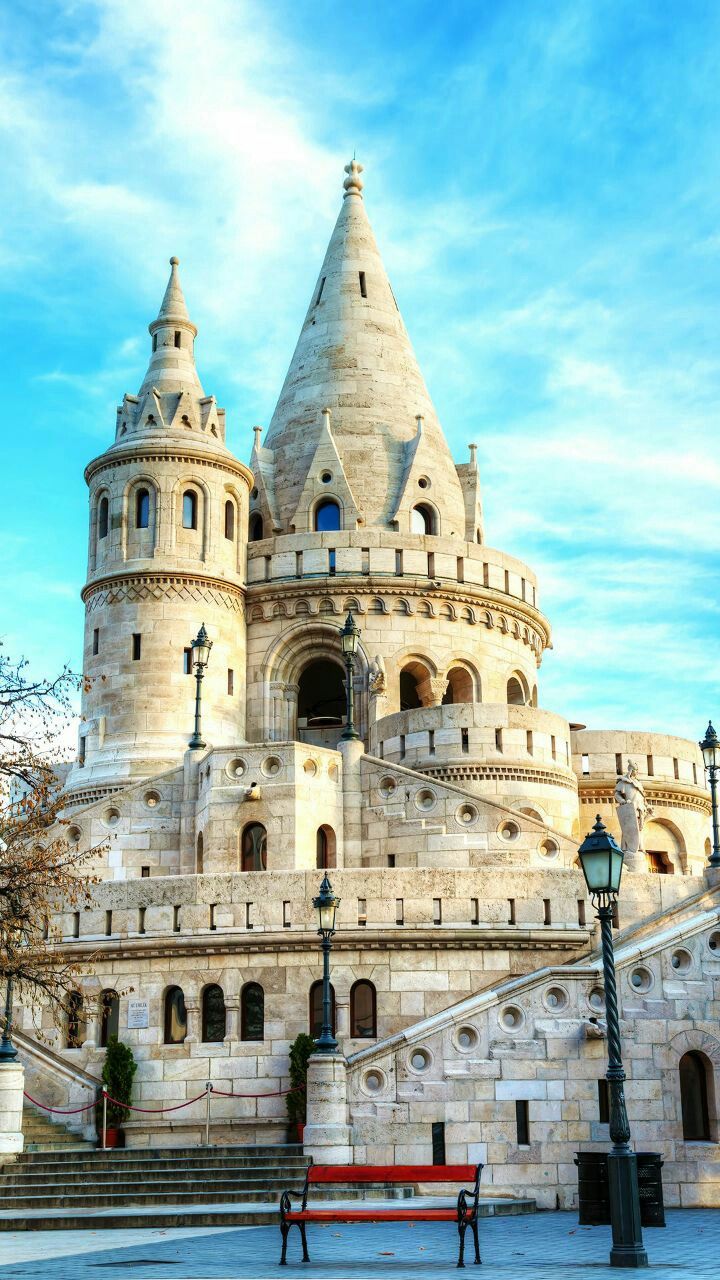
Budapest’s historic Castle District
One of Budapest’s most iconic areas. Buda Castle (13th century) houses the Hungarian National Gallery and the Budapest History Museum, with panoramic views of the Danube and Pest. Nearby, the Gothic Matthias Church — with its colourful roof tiles — was a site of royal coronations.
The neo-Gothic Fisherman’s Bastion offers some of the best views in the city; its seven towers represent the seven Magyar tribes that settled the Carpathian Basin in 895. A UNESCO World Heritage site, the district’s cobblestone streets are perfect for strolling.
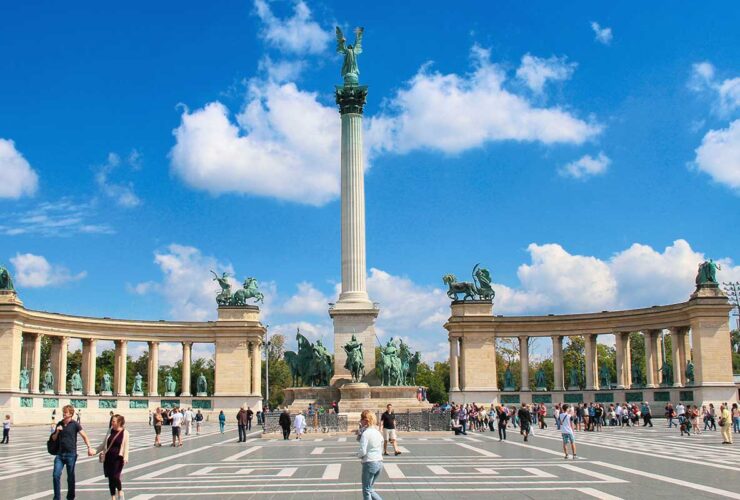
Andrássy Avenue & Heroes’ Square
A grand UNESCO-listed boulevard stretching from the city centre to the City Park, lined with neo-renaissance mansions, luxury shops and theatres — including the magnificent Hungarian State Opera House. It leads to Heroes’ Square and its Millennium Monument, with statues of the leaders of the seven founding tribes, flanked by the Museum of Fine Arts and the Hall of Art.
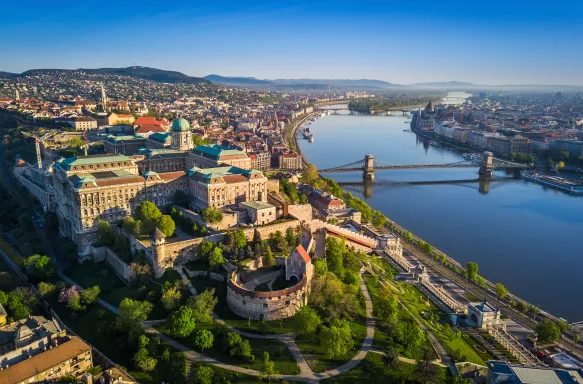
The Danube River
The lifeblood of Budapest, gracefully dividing the historic Buda from the vibrant Pest. A cruise along the Danube offers breathtaking views of the grand Parliament Building, the majestic Buda Castle and the elegant Chain Bridge — especially magical at night when the city lights reflect on the water. The riverbanks are lined with scenic promenades, cosy cafés and charming parks.
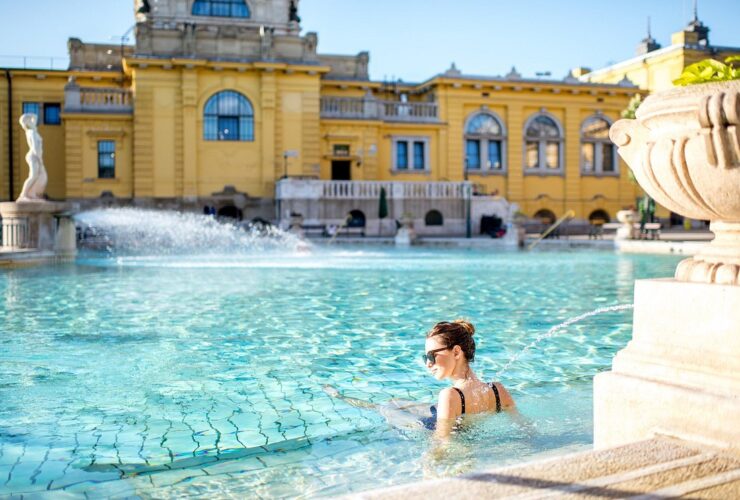
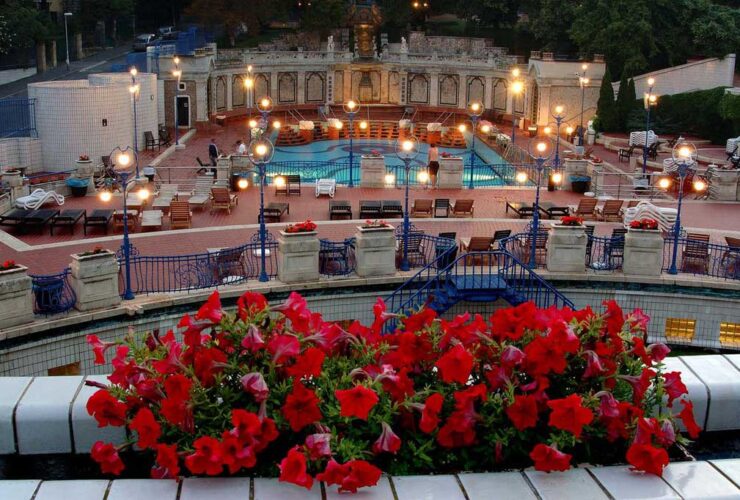
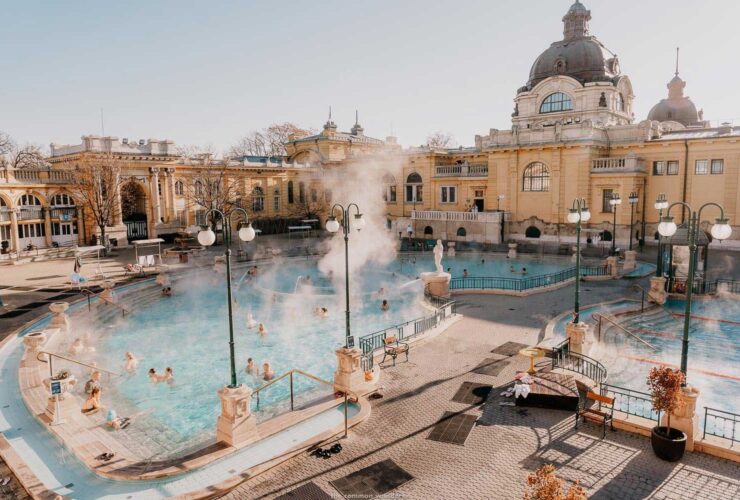
Thermal baths — relaxation & rejuvenation
Budapest is famous for its thermal baths, used for centuries for their healing properties.
Quick facts about Budapest
Before you arrive
Hungary is a Schengen Area member, so entry requirements depend on where you're travelling from.
Visa & entry requirements
EU/EEA citizens travel freely with no visa needed. Visitors from many other countries (UK, USA, Canada, Australia among them) can generally stay up to 90 days in any 180-day period without a visa — this limit applies across the whole Schengen Area combined, not per country. Not every nationality is visa-exempt, though: check requirements for your own passport well before booking, since a short-stay Schengen visa can take time to arrange.
Travel insurance
We recommend a policy covering medical expenses, trip cancellation and lost baggage for the duration of your stay.
Weather & packing
Our courses run across the year, so "what's the weather like" depends on when you're travelling — Budapest has a proper continental climate, with a much wider swing between summer and winter than our Turkish or Mediterranean course cities.
| Season | Typical range | What to expect |
|---|---|---|
| Spring (Mar–May) | Cool, warming | Variable and often breezy, warming steadily toward a pleasant May. |
| Summer (Jun–Aug) | ~23–29°C, peaks to 36–38°C | Hot, with July the warmest month and occasional heatwaves well above the average. |
| Autumn (Sep–Nov) | Cooling steadily | Crisp and increasingly cold as the season progresses, especially by November. |
| Winter (Dec–Feb) | ~-1–4°C, colder snaps to -18°C | Genuinely cold and often snowy — January averages around 8 snow days. A proper winter coat, hat and gloves aren't optional here. |
Documents
Clothing
Electronics
Health & money
Getting to the venue
Budapest Ferenc Liszt International Airport (BUD) sits about 15km from the centre, with a direct public bus link.
| From | Best option | Approx. duration | Approx. cost |
|---|---|---|---|
| Ferenc Liszt Airport (BUD) | 100E Airport Express bus, direct to Deák Ferenc tér (city centre), runs 24/7 | ~40 min, every 6–20 min depending on time of day | See current fares ↗ |
| Ferenc Liszt Airport (BUD) | Official taxi | ~30–40 min (traffic-dependent) | Metered fare, varies with traffic |
The course center on Dohány utca sits in the historic Jewish Quarter, right in the city centre:
Nearest metro
Astoria (M2, red line) is a short walk from the venue; Ferenciek tere (M3) is a nearby alternative. Trams 47 and 49 also pass through Astoria.
BKK network
Budapest's metro (M1–M4), trams and buses run on one integrated ticket system — easy to combine for getting around the city centre.
On foot
The Dohány Street Synagogue, Andrássy Avenue and the Danube are all within comfortable walking distance of the venue.
Neighborhoods & accommodation
The course center is in Erzsébetváros, Budapest's 7th district — one of the most-visited residential neighbourhoods in the city, and a good base for most participants.
| Area | Character |
|---|---|
| Erzsébetváros (7th district) | Historically Budapest's Jewish Quarter, home to the Dohány Street Synagogue — Europe's largest — and, since the early 2000s, the city's "ruin bar" scene (Szimpla Kert and others), built into once-abandoned courtyards. Central, walkable, and a genuine mix of history and nightlife. |
| Around Deák Ferenc tér | Where the three metro lines cross — Budapest's most connected single point, a short tram or walk from the venue. |
Budapest is one of Central Europe's most-visited capitals, so prices vary with season and proximity to the centre — compare current listings for Budapest ↗. Staying in or near Erzsébetváros keeps the venue within easy walking or tram distance.
Money
Cards & ATMs
Card and contactless payment (Visa, Mastercard, Apple Pay/Google Pay) are accepted almost everywhere in Budapest — retailers are legally expected to accept cards where technically feasible. ATMs are common throughout the centre.
Currency note
Hungary uses the forint (HUF), not the euro, despite being an EU member — some tourist-facing spots may quote euro prices, but paying in forint usually works out better.
Watch the bill
Many restaurants already add a "szervizdíj" (service charge, typically 10–15%) to the bill — check before adding a further tip on top, a common tourist mistake.
Tipping
If service isn't already included, 10–15% is standard. If you want to tip on a card payment, say so before the transaction completes — some card machines don't allow adding a tip afterward.
Safety & practical info
Budapest doesn't carry any specific UK Foreign Office warning — the practical risks worth knowing about are the same ones that come up in most major European capitals: petty theft and a couple of well-documented tourist scams.
| Topic | Advice |
|---|---|
| Pickpocketing | Keep bags and valuables close on public transport, at train stations and around tourist sites — the most commonly reported issue. |
| Bar & club bill scams | A known Budapest issue — some venues (and occasionally unlicensed taxi drivers steering tourists toward them) present inflated bills after the fact. Check prices before ordering, and stick to licensed taxis. |
| Drinks | As in most major cities, keep an eye on your drink in bars and clubs. |
| National holidays | Demonstrations around 15 March and 23 October (Hungary's national commemoration days) are usually peaceful but can occasionally turn confrontational — best to avoid large gatherings if you happen to be travelling then. |
Culture & etiquette
If a visit to Széchenyi or Gellért Bath (covered above) is on your list, the bath-house customs are worth knowing before you go:
| Topic | Guidance |
|---|---|
| Thermal bath swimwear | A proper swimsuit is required — cotton T-shirts and shorts aren't accepted as swimwear. |
| Swim caps | Only required in the dedicated swimming-pool sections, not in the thermal/relaxation pools — rules vary slightly by bath. |
| Showers & footwear | A shower before entering the water is expected everywhere, and flip-flops or sandals are worth bringing for getting around poolside. |
| Atmosphere | Relaxation areas are meant to be quiet — a calmer register than you might expect from the photos. |
| General greetings | A handshake for a first meeting is standard; punctuality is appreciated as elsewhere in Central Europe. |
Budapest food & dining
A few dishes that are genuinely Hungarian, not just "Central European food in general":
| Dish | What it is |
|---|---|
| Gulyás (goulash) | In Hungary, this is actually a soup, not the thick stew served under the same name abroad — beef, onion, potato, carrot, small hand-pinched "csipetke" dumplings and sweet paprika. |
| Lángos | Deep-fried dough, traditionally topped with sour cream, grated cheese and a rub of raw garlic — a street-food staple. |
| Paprikás csirke | Chicken in a creamy paprika sauce, served with "nokedli" (small egg-dumplings). |
| Kürtőskalács | A spit-roasted, cinnamon- or chocolate-dusted "chimney cake" — a familiar sight at markets and street stalls. |
| Tokaji & pálinka | Tokaji is Hungary's famous sweet-wine region; pálinka (fruit brandy) and Unicum (an herbal liqueur) are the other well-known local drinks worth trying. |
We arrange tailor-made Erasmus+ sessions on demand — tell us your preferred topic and travel window and we'll schedule it.