
EMA Istanbul
Where two continents meet — our Erasmus+ course center in Istanbul is wrapped in three empires of history, from Hagia Sophia to the Bosphorus. Ideal for Erasmus+ teacher training in cultural heritage and digital learning.
Courses at this center are open to participants travelling from a country other than Türkiye — a core requirement of Erasmus+ mobility.
Let’s take a small tour of İstanbul.
İstanbul is the only city in the world to straddle two continents, where the Bosphorus both divides and connects Europe and Asia. Once Byzantium and then Constantinople, it carries the layered legacy of Roman, Byzantine and Ottoman empires across a skyline of domes and minarets.
During their Erasmus+ staff mobility course in Istanbul, participants turn the whole city into a living classroom: Hagia Sophia, the Blue Mosque and Topkapı Palace around the historic peninsula, the Grand and Spice Bazaars, and a ferry ride along the Bosphorus — heritage, culture and everyday life meeting on the water.
Course topics running at this center.
İstanbul, the bustling metropolis of Türkiye, is a city full of charm, where the past goes hand in hand with the present and every step brings to light a relic of times gone by. At the crossroads of two continents — Europe and Asia — this spectacular city has absorbed the best of both worlds. With its historic landmarks, quintessential cuisine, vibrant nightlife, festivals of art and music, and labyrinths of marketplaces, the beating heart of İstanbul — and the soul of the Bosphorus under the watchful eye of the Maiden’s Tower — is a traveller’s dream.
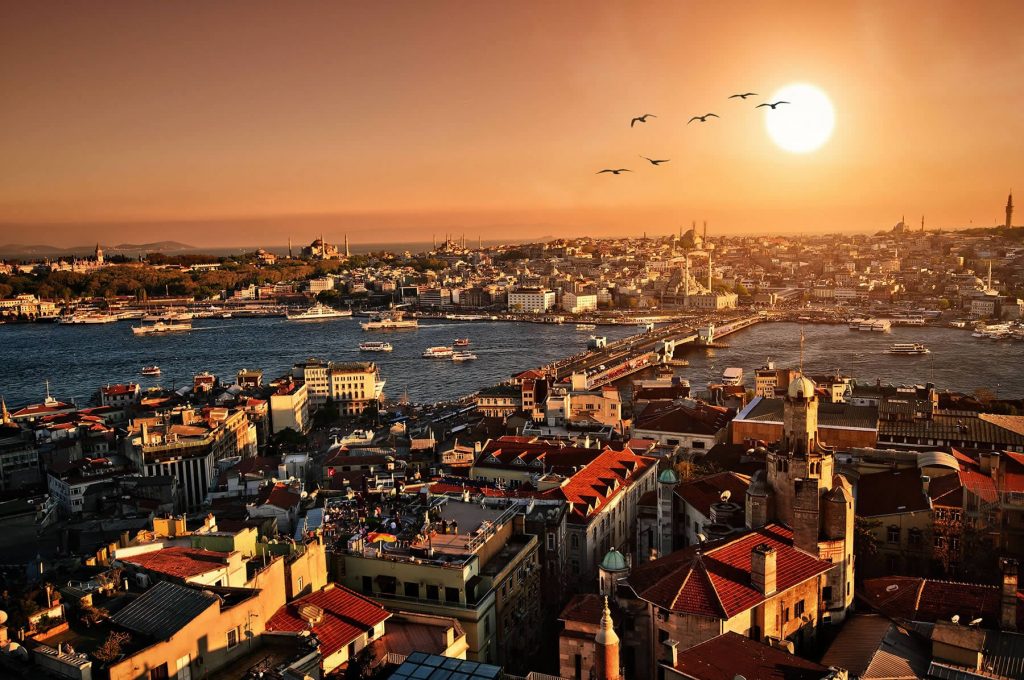
İstanbul’s Historic Peninsula
The magnificent city of İstanbul has always attracted people from all over the world due to its strategic location and wonderful heritage. İstanbul gains much of its fascination from its historical peninsula, also known as Suriçi (Walled City) — founded as a residential area and capital of two empires, the Eastern Roman and the Ottoman, that once ruled across four continents.
Enclosed by the ancient city walls on one side and the Bosphorus, the Sea of Marmara and the Golden Horn on the other, the historic peninsula is the epitome of tourist attractions. Wandering its neighbourhoods amid Eastern Roman ruins and Ottoman artefacts, you feel the scent of history as if you had travelled back in time.
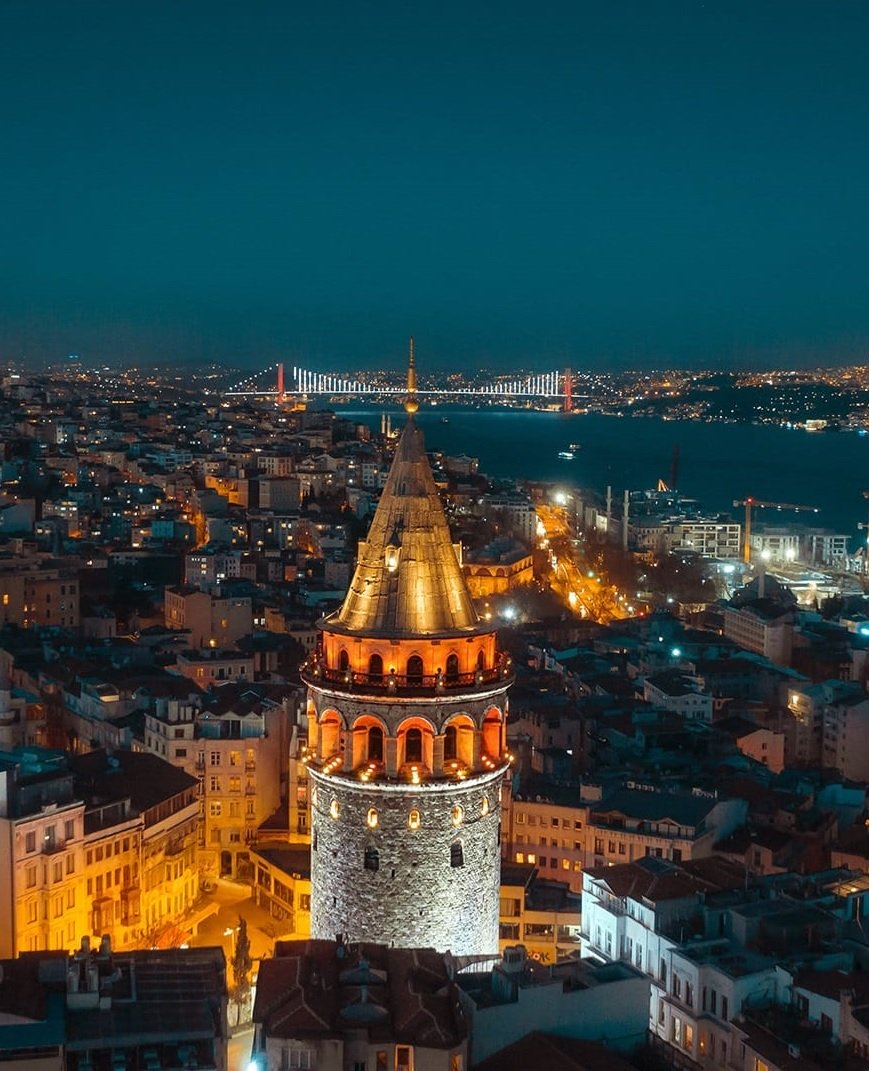
Beyoğlu — where İstanbul unwinds
Beyoğlu has always been a vibrant cultural hotspot. A new journey connects the old to the new — starting from the newly developed Galataport, through the narrow streets of Karaköy, along the charm of İstiklal Caddesi and up to the transformed Taksim Square.
Beyoğlu is a true symphony of culture where East meets West — the pulsating heartbeat of İstanbul’s day and nightlife. Around İstiklal Caddesi, a labyrinth of winding alleys is filled with funky cafés, soulful bars, continental restaurants, historic cinemas and theatres. The nostalgic red tram passes Çiçek Pasajı, Galatasaray High School and elegant consulates, past the Monument to the Republic on Taksim Square.
The Bosphorus Strait
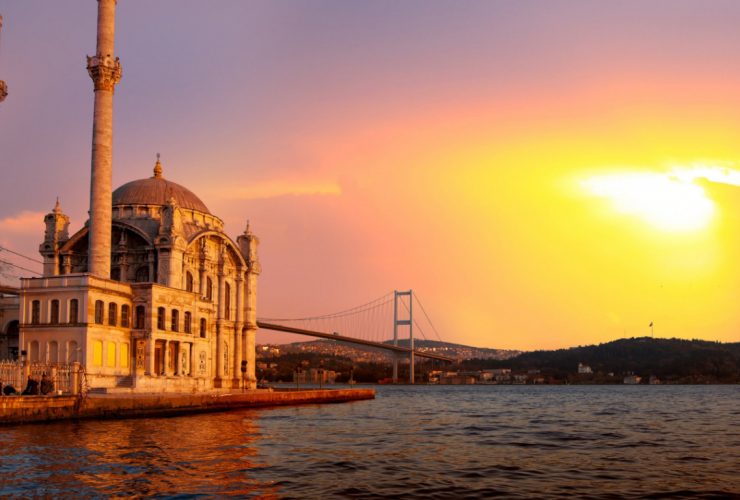
The Bosphorus divides İstanbul in half — one side in Asia, the other in Europe. In some places only 500 metres apart, it has become a popular trading centre and tourist attraction. Hopping on a local ferry and reaching another continent in minutes never seems to wear off.
Along its shores stand the Blue Mosque, Topkapı Palace, the Galata Tower, the Beylerbeyi and Dolmabahçe Palaces, the Rumeli Fortress, the Çırağan Palace and the incomparable Hagia Sophia. The Ottoman-era waterfront mansions (yalı) — some 360 surviving on both sides — are symbols of history and tranquillity.
The Golden Horn
The Golden Horn, an inlet of the mighty Bosphorus, is one of İstanbul’s most important waterways. Named after its horn-shaped course, it was once a vital port where the fleets of the Ottoman and Eastern Roman Empires anchored.
Home to the legendary Galata Tower, the Old Galata Bridge and the glowing Süleymaniye Mosque, the Golden Horn is a moving hub of the city’s historical and cultural life. Nothing compares to watching the sunset over both the Bosphorus and the Golden Horn — what the poets once called “Sadabâd”, the place of bliss.
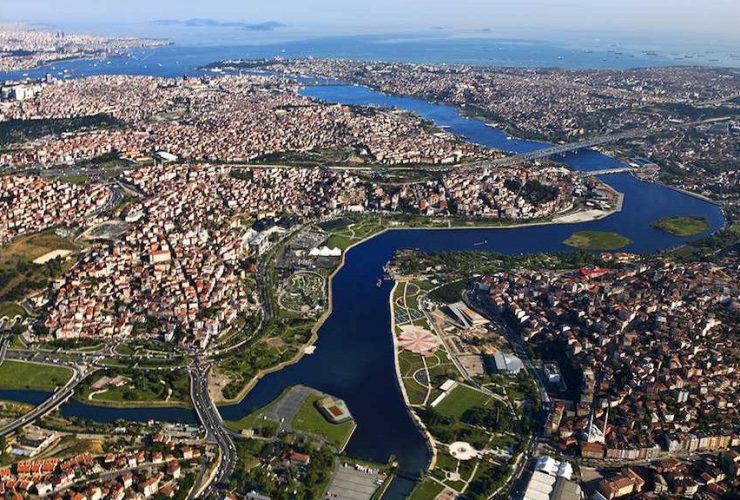
Historic bazaars — crossroads of commerce
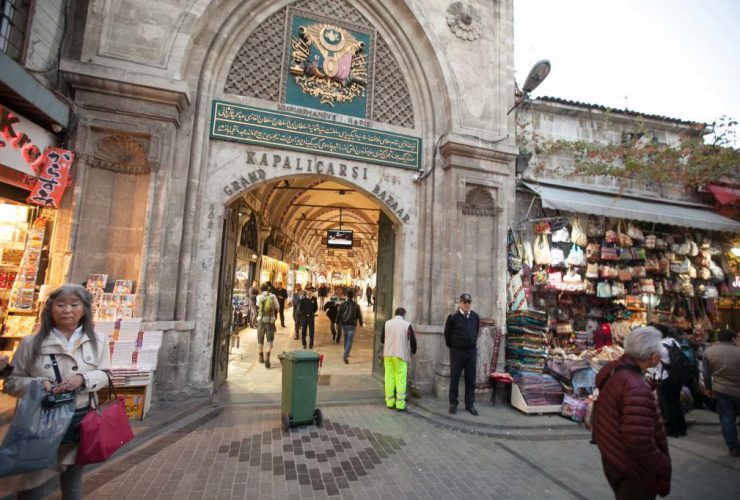
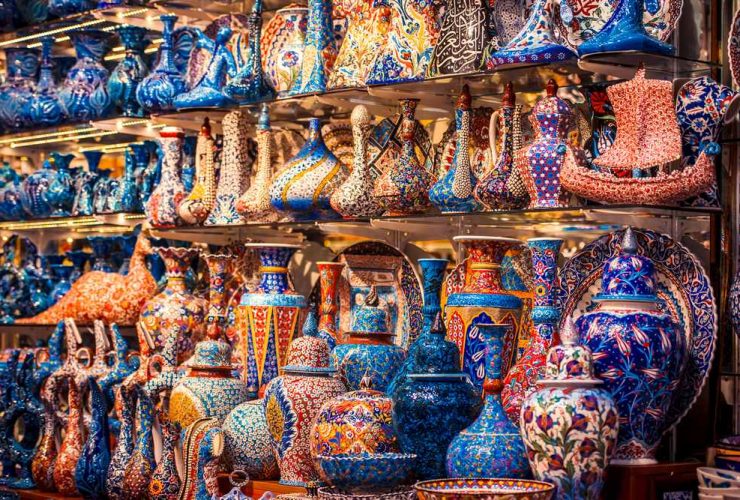
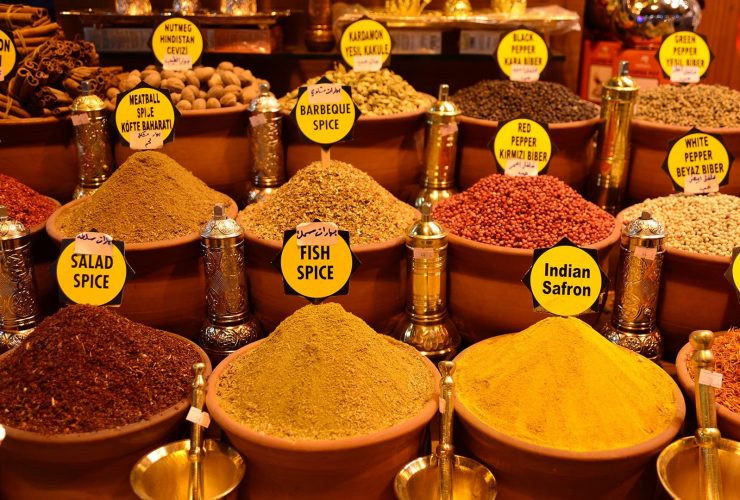
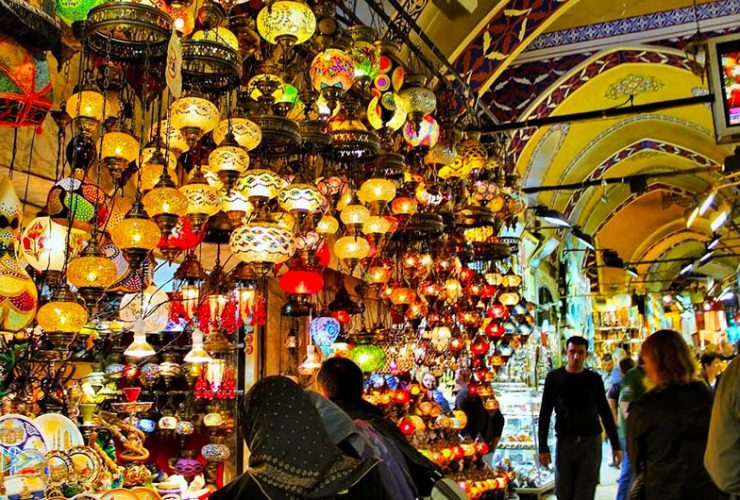
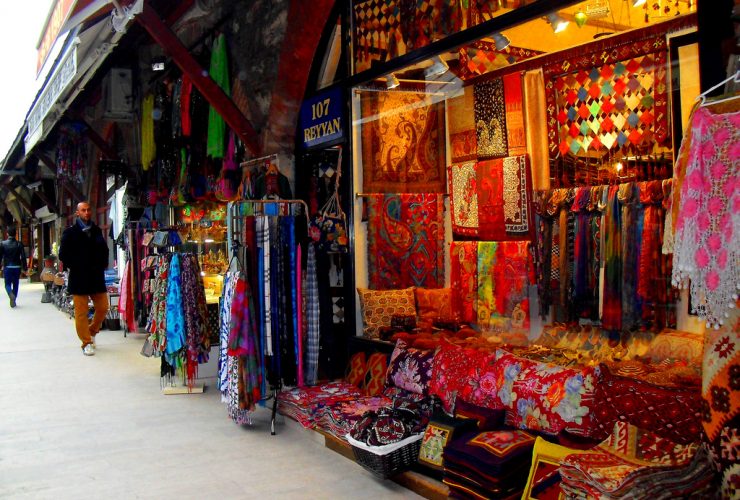
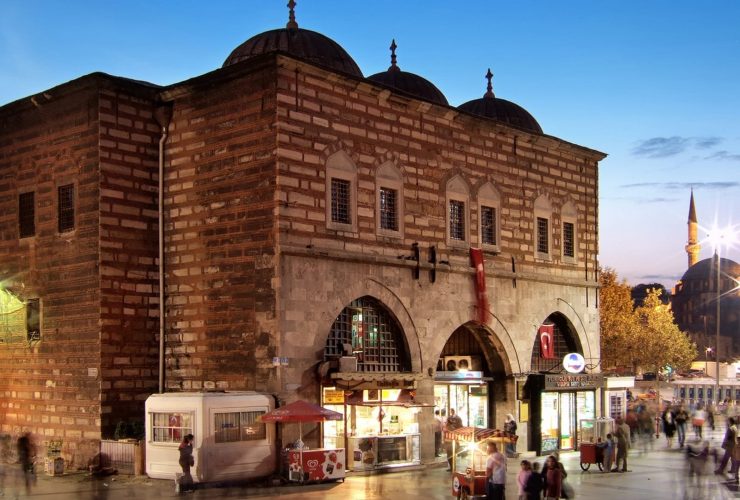
Between the Grand Bazaar and the Spice Bazaar lies the inner heart of İstanbul, Eminönü — where the last real markets of the old city wait to be explored.
Quick facts about Istanbul
Before you arrive
Sort these two things well before departure — neither takes long, but neither should be left until the airport.
Visa & entry requirements
Citizens of the USA, UK, Canada, Australia and many EU countries need an e-Visa before arrival, applied for online — it's normally issued within minutes. Requirements and passport-validity rules vary by nationality, so check yours directly on the official site rather than relying on a general rule of thumb.
Official e-Visa site ↗Travel insurance
We recommend a policy covering medical expenses, trip cancellation and lost baggage for the duration of your stay.
Weather & packing
Our courses run across the year, so "what's the weather like" depends on when you're travelling — here's Istanbul by season, plus a checklist you can actually tick off.
| Season | Typical range | What to expect |
|---|---|---|
| Spring (Mar–May) | ~10–20°C | Mild, occasional rain, increasing sunshine — a light jacket and an umbrella cover most days. |
| Summer (Jun–Aug) | ~22–30°C | Hot and mostly dry. Light clothing, sun protection. |
| Autumn (Sep–Nov) | ~12–22°C | Mild with more frequent rain later in the season — layers work well. |
| Winter (Dec–Feb) | ~5–12°C | Cool and often rainy; occasional snow. A warm jacket is worth the suitcase space. |
Documents
Clothing
Electronics
Health & money
Getting to the venue
Istanbul has two international airports on opposite sides of the city — check which one your flight lands at before you plan your route.
| From | Best option | Approx. duration | Approx. cost |
|---|---|---|---|
| Istanbul Airport (IST) | Havaist shuttle to Taksim, then taxi/metro | 45–60 min + onward leg | ~EUR 6–7 shuttle |
| Istanbul Airport (IST) | Official yellow taxi (metered) | ~45–75 min (traffic-dependent) | ~EUR 70 |
| Sabiha Gökçen (SAW) | Havabus shuttle to Taksim, then taxi/metro | 45–60 min + onward leg | ~EUR 4–5 shuttle |
| Sabiha Gökçen (SAW) | Official yellow taxi (metered) | ~45–60 min | ~EUR 100 |
Once you're in the city, getting to Zeyrek Akademi is straightforward:
From Sultanahmet
About 1.5 km — a 20-minute walk, or one stop on tram T1 (direction Bağcılar).
From Taksim
Take the M2 metro to Vezneciler, then it's roughly a 10-minute walk to the venue.
Public transport & the Istanbulkart
Metro, tram, bus, Marmaray and ferries all run on one contactless card, the Istanbulkart — sold and topped up at machines in every station. Fares are adjusted periodically, so check current pricing in the official app rather than a fixed number here.
metro.istanbul ↗Neighborhoods & accommodation
Where you stay shapes your whole trip. A few areas that work well for course participants:
| Neighborhood | Why stay here | Approx. EUR/night |
|---|---|---|
| Sultanahmet | Walking distance to Hagia Sophia, Blue Mosque, Topkapı — maximum history, limited time needed to see it. | ~80–200+ |
| Beyoğlu / Taksim | Restaurants, nightlife, shopping, strong transport links across the city. | ~100–180 |
| Karaköy | Sea views, trendy cafés, easy tram and ferry access. | ~100–250 |
| Cihangir | Rooftop cafés, design shops, local feel — hilly but authentic. | ~120–200 |
| Kadıköy (Asian side) | A quieter, more local experience — seafront walks, fish restaurants, better value. | ~60–150 |
Ranges are approximate and vary with season and how far ahead you book — check current listings before deciding.
Money
Cards & ATMs
Credit/debit cards are widely accepted in restaurants, hotels and shops. ATMs are everywhere — withdrawing TRY directly usually gives a better rate than exchanging cash.
Before you fly
Notify your bank you're travelling, so a card payment in Turkey doesn't get blocked as suspicious. Carry a backup card if you have one.
Cash still matters
Bazaars, small shops and some taxis prefer cash — keep some TRY on you. Avoid exchanging money at the airport; city-centre exchange offices are consistently better value.
Tipping
10–15% in restaurants is standard. Rounding up for taxis is common and appreciated.
Safety & practical info
Istanbul welcomes over 20 million international visitors a year and tourist areas have a visible police presence. As in any major city, ordinary common sense covers most of it.
| Topic | Advice |
|---|---|
| Pickpocketing | Keep valuables in a front pocket or crossbody bag, especially in the Grand Bazaar, Taksim, and on ferries. |
| Taxis | Official yellow taxis from marked ranks, or BiTaksi/Uber. Avoid unmarked cabs; insist on the meter. |
| Scams | Shoe-shine "drops" and unsolicited restaurant invitations near tourist sites are common — a polite decline is enough. |
| Crowds | Avoid large gatherings or demonstrations; stick to established tourist areas. |
| At night | Main tourist areas are well-lit and patrolled. Travelling in a group after dark is still sensible. |
Culture & etiquette
Istanbul sits between East and West, modern and traditional — a little awareness goes a long way.
| Topic | Guidance |
|---|---|
| Mosques | Remove your shoes before entering. Dress modestly (headscarf recommended for women, no shorts for men) and avoid visiting during the five daily prayer times. |
| Greetings | "Merhaba" (hello) goes a long way. Turkish culture values patience and politeness — "lütfen" (please) and "teşekkür ederim" (thank you) are always appreciated. |
| Dress code | Modest dress in religious sites and more conservative districts; beachwear stays at the beach or pool. |
| Dining | Meals are social and often unhurried — 1–2 hours is normal, not rushed. Tipping 10–15% is customary. |
| Photography | Always ask before photographing people. Some mosques restrict photography inside. |
Turkish food & dining
A few dishes worth seeking out while you're here:
| Dish | What it is |
|---|---|
| Lahmacun | Thin flatbread topped with minced meat, tomato and parsley — squeeze lemon over it, roll it up, eat by hand. |
| Döner kebab | Seasoned meat roasted on a vertical spit, sliced thin, served in flatbread with vegetables. |
| Simit | Sesame-crusted bread ring — crisp outside, chewy inside, sold by street vendors everywhere. Perfect with tea. |
| Meze | Small shared plates — hummus, aubergine dip, stuffed vine leaves, white cheese. Order several to share. |
| Turkish breakfast | A leisurely spread of cheese, olives, honey, eggs, tomatoes and cucumbers with strong tea — not meant to be rushed. |
| Baklava | Crisp filo pastry with pistachios, soaked in honey syrup — pairs naturally with Turkish coffee. |
Lokanta (canteen-style)
Home-style cooking, casual and budget-friendly.
Meze bar
Multiple small plates to share — great for groups.
Fish restaurants
Best along the Bosphorus and near Galata Bridge.
Turkish coffee & tea
Coffee is served in small cups, grounds at the bottom — sip slowly, never stir. Tea (çay) is offered almost everywhere, often on the house.
We arrange tailor-made Erasmus+ sessions on demand — tell us your preferred topic and travel window and we'll schedule it.