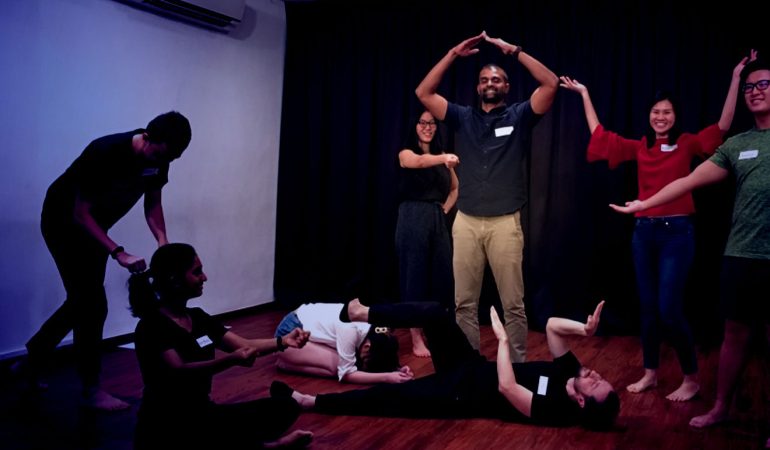

To Develop Students’ Creativity and Social Skills: DRAMA WORKSHOPS

Education is a field in which skills, attitudes and values in social life are acquired.

Today, it is expected from the teacher to direct the education process, to create a step for education and to place the student at the center of education. Teachers are not seen as the absolute authority in the learning environment, they ensure that the student acquires relevant information efficiently.

The teacher is also considered as a supportive guide for individuals who discover, learn and make sense.

Teachers are expected to see the differences between their students, create enriched learning environments for them, and support the educational process with relevant materials. A learning environment where students can express themselves freely and show their presence in the learning process is important. For this reason, it will be insufficient to use only traditional methods such as the narration method or the method of asking questions and getting answers.

The drama method forms the basis of the “live and learn” method. Drama is the imitation of a purpose or idea about the lives of a group and animals using improvisation or animation techniques. Drama is to enliven an experience, an event, an idea. Sometimes in the process of individually “playing” the meaning of a concept or behavior, group work is done using improvisation, role playing, theater or drama techniques. According to another understanding, drama is an approach that will enable individuals to become individuals as an educational method, a creative field of education and a discipline.

This course will enable students to use drama as a learning tool to improve their creativity and social skills.

Read More

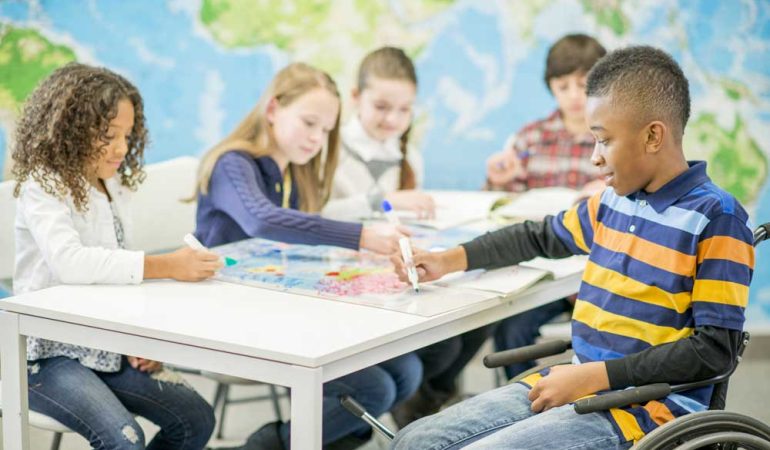
Every Child Is Special” New Strategies for Students with Special Needs.

This course aims to assist teachers in developing teaching strategies that are suitable for students with different needs. Participants will learn different methods to understand students’ learning styles and needs, as well as new strategies to develop educational materials and learning environments to increase students’ confidence. The course also aims to enhance collaboration among teachers in Europe, experience different cultures, and share best practices.

LEARNİNG OUTCOMES

  • Developing students’ competences regarding individual characteristics (strengths, preferences and diverse needs) and its implications for teaching and learning
  • Learn to explore the fundamental principles of more inclusive, differentiation in the classroom and apply techniques and strategies to foster active participation and motivation in today’s diverse classrooms.
  • Using guidelines, strategies and techniques to implement diversity to improve lesson design, teaching and support high levels of engagement and achievement for all students
Read More

Active Learning through Project-Based Education

This course is designed to help teachers enhance active learning in their classrooms through the use of project-based education. Project-based learning (PBL) fosters problem-solving, critical thinking, and collaboration while creating an active learning environment. According to Thomas (2000), PBL significantly increases students’ deep learning experiences and helps retain knowledge over time. Furthermore, Barron & Darling-Hammond (2008) emphasize the role of PBL in developing students’ social skills.

Course Methodology

The course is based on hands-on activities and group work, focusing on how to effectively implement project-based education and active learning techniques. Participants will create their own projects to experience how this method can be applied in their classrooms. The course includes both theoretical and practical components, supported by references from reliable sources such as the EU, OECD, and UNESCO.

Course Objectives

  • Teach participants the methods of project-based education.
  • Develop projects that actively engage students in the learning process.
  • Foster critical thinking, problem-solving, and collaboration skills through project-based education.
  • Integrate project-based learning strategies into classrooms in line with Erasmus+ priorities.

Learning Outcomes

  • Participants will acquire the skills to implement project-based education in their classrooms.
  • They will develop projects that actively engage students in the learning process.
  • Participants will enhance critical thinking and problem-solving skills through PBL.
  • They will apply digital tools to support project-based learning strategies.
Read More

Inclusive Classrooms: Educating Students with ASD and ADHD

This course aims to provide educators with inclusive strategies for teaching students with Autism Spectrum Disorder (ASD) and Attention Deficit Hyperactivity Disorder (ADHD). In alignment with the 2021-2027 Erasmus+ Programme’s priorities on inclusion and diversity, the course will help teachers manage classroom diversity and address the individual learning needs of students with ASD and ADHD through effective classroom management and teaching strategies.
Through hands-on activities, student-centered approaches, and cognitive-behavioral strategies, educators will learn how to better understand and support the learning processes of students with ASD and ADHD. Participants will also learn how to use various digital tools and classroom management techniques to meet the needs of these students.

Course Methodology

The course will be delivered using an activity-based, hands-on, and collaborative methodology. Educators will learn theoretical information about how to respond to the individual needs of students with ASD and ADHD, followed by case studies and classroom applications to practice these skills. Each day will include group work, role-playing activities, and creative problem-solving exercises to help educators improve their inclusive practices in the classroom.
Participants will also learn how to use digital tools, learning management systems, and assistive technologies to create effective learning environments for students with ASD and ADHD.

Course Objectives

  • To provide educators with inclusive learning strategies for students with Autism Spectrum Disorder and Attention Deficit Hyperactivity Disorder.
  • To teach inclusive classroom management methods and student-centered approaches.
  • To support the learning processes of students with ASD and ADHD using digital tools and assistive technologies.
  • To promote inclusive classroom environments in alignment with Erasmus+ priorities.
Read More